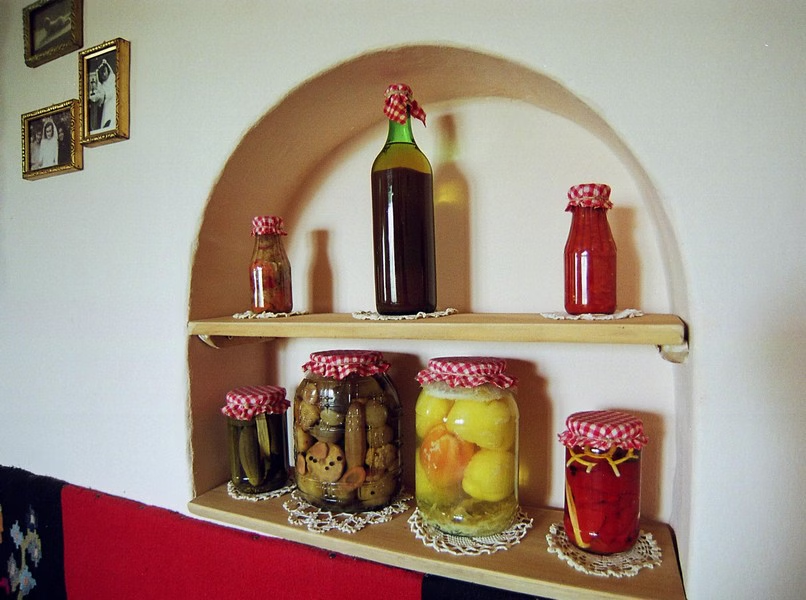
A special place in Vojvodina’s cuisine is occupied by preparing pickled and preserved produce for winter. It used to play an important role in storing food reserves for long winter days, while today, when many types of fruits and vegetables are available throughout the year, winter storage remains a tradition in many (especially older) households in Vojvodina.
Vegetables and fruits are kept fresh (dried), pickled and cooked. Preparing of picked and preserved food for winter includes preparing different types of salads, jams, compotes or juices. The most commonly prepared salads are: pickles (usually, in the Slovak way, sliced), pickled green tomatoes, pickled peppers (sliced, cooked, pepperoni in oil), mixed vegetables. As for the sweets, there are compotes made of apricots, peaches, plums, pears, quinces, apples and jam made of white cherries, strawberries, watermelons, plums and walnuts… Apricots, plums, quinces, pomegranates are cooked to prepare jam… Juices are prepared from tomato, apricot, raspberry, strawberry, peach, quince, elderberry…
Fruit butter – Half a century ago, in every Vojvodina pantry one could find fruit butter. That magical product that adorned pantry shelves, sideboards and guest room cabinets, was synonymous with craving for sweets. It is made by cooking fresh fruits, most often plums and apricots, with sugar, and when you get a thick mass, it is poured into jars. The jars are sealed with cellophane, checkered paper or cloth and stored for the winter. Jam is also added to cakes and other treats.
Compote – Compote, dunst or dunc is the name for canned fruit that is put into jars and stored for winter days. It is given to children as vitamin supplement over the winter, and in case they get sick. The compote, especially of the stoned fruit, is served with roast poultry, pork and game meat. Pears, apricots, peaches, apples, sweet and sour cherries, plums are placed in jars or bottles … They adorned the shelves in rooms and pantries and got emptied by the time first spring fruit trees flower.
A special place belongs to sauerkraut. Sauerkraut was originally known to the ancient Romans, and today it is considered one of the most important dishes in Germany. In Vojvodina, almost every household prepares it for the winter at home, and it is served with meat and sausages.