
MUSEUM OF SREM – Sremska Mitrovica
The need to establish a museum in Sremska Mitrovica arose in the second half of the 19th century, when many monuments from ancient Sirmium were transferred to other museums, primarily in Zagreb, Budapest, and Vienna. As early as 1869, researcher Feliks Kanic initiated the founding of the “Sirmium” society with the task of collecting ancient monuments and preparing for the opening of a museum.
Ignjat Jung, permanent trustee of the National Museum in Zagreb and an antiquities enthusiast, introduced the professional public to these artifacts between 1885 and 1908 through 200 long letters containing exceptional drawings, sketches, and plans of Roman Sirmium and other ancient monuments in Srem. Through his dedicated work, he paved the way for modern archaeology.
The Museum in Sremska Mitrovica was established in June 1885, on the initiative of the city’s first mayor, Ćira Milekić, following the abolition of the Military Frontier in Srem. Unfortunately, the museum did not receive dedicated premises, but Roman stone monuments were placed in the city park.
The first museum to open was the Museum of Church Art in the Old Serbian Church. On November 23, 1946, on the initiative of the provincial authorities of Vojvodina, the City Museum in Sremska Mitrovica was founded. Architect Branko Vasilić, an enthusiast whose dedicated work helped develop museum activities, was appointed as the museum’s director. In 1948, the first permanent exhibition was opened in the Bajić family house, a bourgeois residence from the late 18th century. Stone monuments from the city park, which now form the core of the current collection, were relocated to the courtyard of this building. The Museum of Church Art was incorporated into the City Museum in 1952, and the institution was renamed the Museum of Srem.
The museum is a complex space with archaeological, historical, ethnological, natural history, and art collections. It contains two permanent exhibitions—archaeological and historical—housed in two buildings. The permanent historical exhibition is located in a building that originally served as the headquarters of the Petrovaradin Regiment and later housed the District Court until 1982, when it was handed over to the Museum of Srem. The exhibition covers the period from the 12th century to the end of World War I and, in addition to the historical collection, presents ethnological artifacts and collections of church and applied art. The same building also houses the natural history exhibition, featuring mineralogical-petrological, paleontological, and archaeozoological specimens. In addition to the permanent exhibitions, the Museum of Srem hosts various thematic exhibitions, lectures, workshops, and promotional events.
The trademark of the Museum of Srem is the head of Apollo, dating from 1987. Made of bronze, it originates from the 2nd century AD. A valuable archaeological find in the lapidarium is a sundial composed of a group of figures from Greek mythology (Atlas, Heracles, and Iphicles). The museum also owns 10 elements of a ceremonial gold belt (a buckle, a large tongue, five pseudo-buckles shaped like owls, a belt fitting for hanging, a smaller tongue fitting connected with a shield-shaped fitting, and a circular fitting) of an Avar prince from the 7th century, presented via holographic projection.
Working hours:
Monday: 09:00 AM – 03:00 PM
Tuesday – Friday: 09:00 AM – 05:00 PM
Saturday – Sunday: 10:00 AM – 04:00 PM
Ticket Prices: Individual visit 300 RSD; individual visit with guided tour 400 RSD; 3 or more persons 250 RSD per person; 3 or more persons with guided tour 300 RSD per person. Guided tour in English 10 EUR per person, for groups 8 EUR per person.
LAPIDARIUM OF THE MUSEUM OF SREM
The lapidarium of the Museum of Srem, located in the courtyard of the museum building at the Sveti Stefan Square 15, displays the most valuable stone monuments from the ancient era, where new mosaics are “born,” and presents altars and other archaeological finds from the Sirmium area.
Sremska Mitrovica is also known for its medieval cultural and historical heritage, with visible buildings from the Baroque period.
Text taken from www.topsrbija.com
Nearby attractions
-
 Udaljeno 147 m
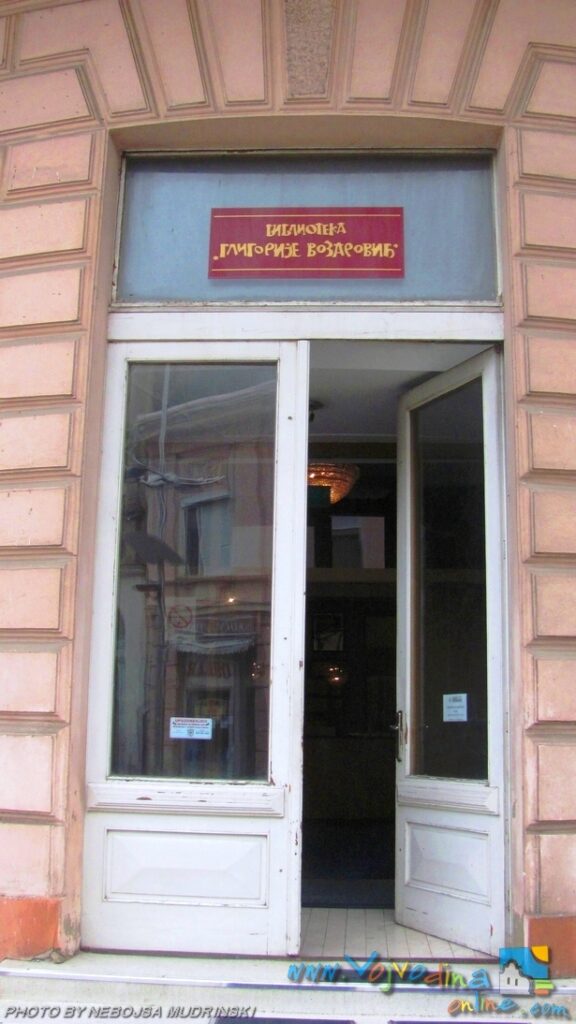
“GLIGORIJE VOZAREVIĆ” LIBRARY – Sremska Mitrovica
Working hour: 08:00 – 19:00, Saturdays 08:00 – 13:00.
Read more
-
 Udaljeno 43 m
THE SOKOL SOCIETY – Sremska Mitrovica
The Sokol Society “Partizan” was found in 1902. as the sport sokol society and it owns the physical education hall of 200 m2 and field...
Read more

-
 Udaljeno 99 m
HISTORICAL ARCHIVE OF SREM – Sremska Mitrovica
The Historical Archive “Srem” was established in 1946, with its headquarters in Sremska Mitrovica. It is a regional institution covering seven municipalities in Srem: Stara...
Read more

-
Udaljeno 0 m
MILITARY FRONTIER BRIGADE HEADQUARTERS- Sremska Mitrovica
The building was erected in the second half of the 18th century. At the beginning, it was used for the accommodation of the command officers...
Read more -
Udaljeno 43 m
THE SOKOL SOCIETY – Sremska Mitrovica
The Sokol Society “Partizan” was found in 1902. as the sport sokol society and it owns the physical education hall of 200 m2 and field...
Read more -
Udaljeno 67 m
“SREM” INSTITUTION FOR THE NURTURING OF CULTURE – Sremska Mitrovica
The Institution for the Nurturing of Culture “Srem” is a social organization in the fields of culture, education, science, art, and creative work, founded in...
Read more -
Udaljeno 67 m
MILITARY FRONTIER COURT BUILDING – Sremska Mitrovica
The representative edifice of the former Main Guard from the time of the Military Frontier is situated in the vicinity of the town park. Along...
Read more -
 Udaljeno 142 m
“SIRMIUMART” CULTURAL CENTER – Sremska Mitrovica
The “SIRMIUMART” Cultural Center was founded in 1972 as a cultural institution that brought together the musical and poetic activities that had previously existed in...
Read more -
 Udaljeno 91 m
MILITARY FRONTIER BUILDING OF THE MAIN GUARD – Sremska Mitrovica
The representative edifice of the former Main Guard from the time of the Military Frontier is situated in the vicinity of the town park. Along...
Read more


-
Udaljeno 67 m
“SREM” INSTITUTION FOR THE NURTURING OF CULTURE – Sremska Mitrovica
The Institution for the Nurturing of Culture “Srem” is a social organization in the fields of culture, education, science, art, and creative work, founded in...
Read more -
Udaljeno 142 m
“SIRMIUMART” CULTURAL CENTER – Sremska Mitrovica
The “SIRMIUMART” Cultural Center was founded in 1972 as a cultural institution that brought together the musical and poetic activities that had previously existed in...
Read more
-
Udaljeno 43 m
THE SOKOL SOCIETY – Sremska Mitrovica
The Sokol Society “Partizan” was found in 1902. as the sport sokol society and it owns the physical education hall of 200 m2 and field...
Read more -
Udaljeno 184 m
THE HUNTING GROUND “KARAKUŠA” – Ruma
The complete surface of hunting ground is 8.125,22 ha and 2.257 ha of it is surrounded by the fence. The main kinds of a big...
Read more -
Udaljeno 184 m
HUNTING GROUND “KUPINIK” – Pećinci
Hunting grounds “Kupinik” located around the Sava River – Pećinci occupies the area of 7.953 ha. The main sort of big game is wild boar...
Read more -
Udaljeno 184 m
HUNTING AREA “KUĆINE” – Šid
It is located in the municipality of Šid, with total area of 1,955 ha, of which 1,403 ha are enclosed. It is almost completely forested....
Read more

-
Udaljeno 161 m
THE TEMPLE OF ST. MARTYR DEMETRIOS – Sremska Mitrovica
The building of the temple of St. Sirmium Bishop Irinej and rector Dimitrije started on August, 26th 1994. Since 1999., there were held church services...
Read more

-
Udaljeno 161 m
THE TEMPLE OF ST. MARTYR DEMETRIOS – Sremska Mitrovica
The building of the temple of St. Sirmium Bishop Irinej and rector Dimitrije started on August, 26th 1994. Since 1999., there were held church services...
Read more
-
Udaljeno 184 m
THE HUNTING GROUND “KARAKUŠA” – Ruma
The complete surface of hunting ground is 8.125,22 ha and 2.257 ha of it is surrounded by the fence. The main kinds of a big...
Read more -
Udaljeno 184 m
HUNTING GROUND “KUPINIK” – Pećinci
Hunting grounds “Kupinik” located around the Sava River – Pećinci occupies the area of 7.953 ha. The main sort of big game is wild boar...
Read more -
Udaljeno 184 m
HUNTING AREA “KUĆINE” – Šid
It is located in the municipality of Šid, with total area of 1,955 ha, of which 1,403 ha are enclosed. It is almost completely forested....
Read more
-
Udaljeno 0 m
MILITARY FRONTIER BRIGADE HEADQUARTERS- Sremska Mitrovica
The building was erected in the second half of the 18th century. At the beginning, it was used for the accommodation of the command officers...
Read more -
Udaljeno 67 m
“SREM” INSTITUTION FOR THE NURTURING OF CULTURE – Sremska Mitrovica
The Institution for the Nurturing of Culture “Srem” is a social organization in the fields of culture, education, science, art, and creative work, founded in...
Read more -
Udaljeno 67 m
MILITARY FRONTIER COURT BUILDING – Sremska Mitrovica
The representative edifice of the former Main Guard from the time of the Military Frontier is situated in the vicinity of the town park. Along...
Read more -
Udaljeno 142 m
“SIRMIUMART” CULTURAL CENTER – Sremska Mitrovica
The “SIRMIUMART” Cultural Center was founded in 1972 as a cultural institution that brought together the musical and poetic activities that had previously existed in...
Read more -
Udaljeno 91 m
MILITARY FRONTIER BUILDING OF THE MAIN GUARD – Sremska Mitrovica
The representative edifice of the former Main Guard from the time of the Military Frontier is situated in the vicinity of the town park. Along...
Read more -
Udaljeno 99 m
HISTORICAL ARCHIVE OF SREM – Sremska Mitrovica
The Historical Archive “Srem” was established in 1946, with its headquarters in Sremska Mitrovica. It is a regional institution covering seven municipalities in Srem: Stara...
Read more