
ANNEX OF THE CITY MUSEUM OF VRŠAC “PHARMACY ON THE STAIRS” – VRŠAC
At the corner of Kumanovska Street and Stevan Nemanja Street stands one of the most representative and oldest buildings of old Vršac—the first pharmacy in the city and a cultural monument of great importance.
The building was constructed in 1784 under the name “Pharmacy at the Savior” or “At the Salvador.” It later became known as “The Pharmacy on the Steps” because the staircase, which is now used to enter the building, was subsequently “attached” to the western facade. This is unusual for a Baroque-style building, as staircases are not typical of this architectural style. Before the staircase was added, the entrance was from the opposite side, from another street, and the pharmacist accessed the pharmacy from his apartment, serving customers directly. It functioned as the City Pharmacy until 1971, when it was handed over to the city authorities, who then assigned it to the museum as an annex of the City Museum of Vršac.
The original owners were Germans born in Vršac, whose ancestors settled in the region during the reign of Maria Theresa, starting from 1718. The last owner of the building was Aleksandar, the youngest half-brother of Paja Jovanović. He purchased the building in 1927 after arriving from Budapest, where he had also worked as a pharmacist.
The first room, the so-called “officina” (the former pharmacy), has preserved the full authenticity of its time: the cash register, scale, entrance bell, storage jars for chemicals, and the complete inventory dating from the second half of the 18th century.
Permanent Exhibitions in “The Pharmacy on the Steps”
“The Art of Pharmacy: From Plant to Tablet/Pill”
This exhibition, divided into several sections, presents the process of creating medicinal preparations—from their beginnings to their sale in the “officina.” The first part displays the sales area. Various products of the pharmacy are shown, most of which were historically handmade and based on plant raw materials. The third section features the laboratory, displaying the tools and equipment necessary for production. The next part is dedicated to the pharmacist’s workspace, with a reconstructed working room. The attic represents the final exhibition section, which was historically used for drying, sorting, grinding, and preparing plant materials for production.
Of particular importance are the ceramic storage jars, handmade pharmacy scales, large containers for powdered substances with original labels from 1870, boxes for packaging medicines, original prescriptions from former owners, and billing forms.
“Natural History Exhibition”
A representative part of the geological-paleontological and zoological collections is displayed.
The geological-paleontological collection was assembled by Rudolf Mileker from southern and central Banat, as well as from the southern part of Romanian Banat. A smaller portion of minerals originates from mines in Reșița. The paleontological material includes numerous mammoth bones (including two lower jaw sections) and hundreds of fossils of paleoflora and fauna.
The zoological collection consists of mammals and birds. The mammal collection is smaller but includes representative specimens typical of southern Banat fauna. It is little known in Europe that such a small area hosts two significant populations of wolves (Canis lupus), found in the Vršačke planine and the Deliblatska peščara. The collection includes dozens of specimens from 11 species (wolf, wildcat, polecat, pine marten, badger, blind mole-rat, and others).
The ornithological collection includes 175 taxidermy specimens representing 107 bird species. It is nearly a century old and serves as comparative material. The collection was created between 1906 and 1911 and later supplemented between the two world wars. It was prepared by skilled taxidermists and bird experts. The Vršac and Timișoara ornithological collections can be viewed as a single unit, as they were created in the same period, largely from the same area, and systematized by the same leadership and preparators.
The collection includes rare bird species no longer found in this area, such as the griffon vulture (Gyps fulvus), cinereous vulture (Aegypius monachus), white-tailed eagle (Haliaeetus albicilla), eastern imperial eagle (Aquila heliaca), golden eagle (Aquila chrysaetos), European honey buzzard (Pernis apivorus), saker falcon (Falco cherrug), Ural owl (Strix uralensis), Eurasian eagle-owl (Bubo bubo), great bustard (Otis tarda), and many others.
Working Hours
Tuesday – Friday: 10:00–16:00
Saturday – Sunday: 10:00–17:00
Monday: closed
Ticket Prices (individual visits)
Adults: 150 RSD
Students and pensioners: 100 RSD
Free admission for: members of the Museum Society of Serbia, members of ICOM, persons with disabilities, children under 12
Nearby attractions
-

WINE CELLAR “VINIK” – Vršac
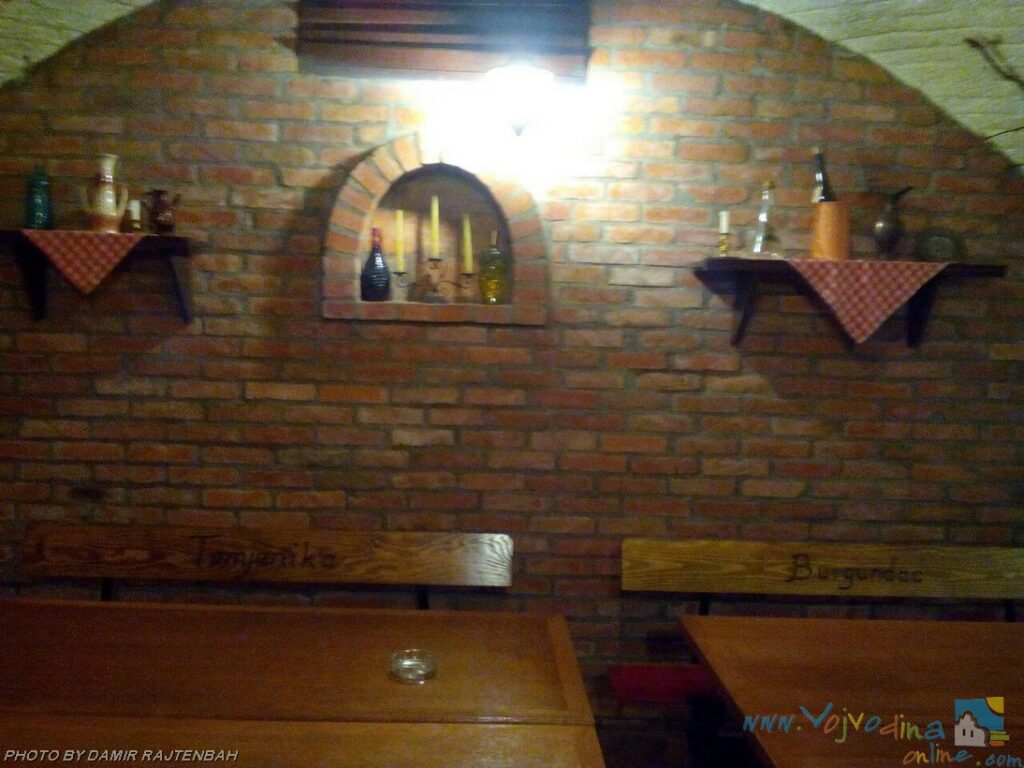
The family winery “Vinik” is located in the centre of the city of Vrsac, today the only registered wine cellar of 980 as there were...
Read more

-
 Udaljeno 406 m
”STERIJA” NATIONAL THEATRE – Vršac
Theatrical life in Vršac has existed for over two centuries. In 1761, a large Serbian magistrate building was constructed, which served as a permanent theatre...
Read more

-
PALACE OF THE BANAT EPARCHY – Vršac
After the seat of the ancient Vršac Episcopate was returned from Caransebeș to Vršac in 1950, construction of the Bishop’s Palace in Vršac began to...
Read more

-
ANNEX OF THE CITY MUSEUM OF VRŠAC “PHARMACY ON THE STAIRS” – VRŠAC
At the corner of Kumanovska Street and Stevan Nemanja Street stands one of the most representative and oldest buildings of old Vršac—the first pharmacy in...
Read more -
 Udaljeno 232 m
CITY HALL – Vršac
Vršac got the city hall after two communities have united in 1795. – Serbian Vršac and German Vršac – into one city. Since 1717. they...
Read more -
Udaljeno 261 m
“STERIJINA KUĆA” MUSEUM – Vršac
More than 150 years after the death of the father of Serbian drama, Jovan Sterija Popović, the house on St. Teodor Square in Vršac, where...
Read more -
Udaljeno 347 m
CITY LIBRARY – Vršac
The City Public and School Library was founded in 1887 by Felix Mileker. The Vršac City Library is one of the oldest in the country,...
Read more -
PALACE OF THE BANAT EPARCHY – Vršac
After the seat of the ancient Vršac Episcopate was returned from Caransebeș to Vršac in 1950, construction of the Bishop’s Palace in Vršac began to...
Read more -
Udaljeno 406 m
”STERIJA” NATIONAL THEATRE – Vršac
Theatrical life in Vršac has existed for over two centuries. In 1761, a large Serbian magistrate building was constructed, which served as a permanent theatre...
Read more


-
Udaljeno 261 m
WINE HOUSE “RAB” – Vršac
In Sterija’s house on the town square, the RAB – Wine House offers you a top wine list with 250 types of wine from all...
Read more -
WINE CELLAR “VINIK” – Vršac
The family winery “Vinik” is located in the centre of the city of Vrsac, today the only registered wine cellar of 980 as there were...
Read more

-
ANNEX OF THE CITY MUSEUM OF VRŠAC “PHARMACY ON THE STAIRS” – VRŠAC
At the corner of Kumanovska Street and Stevan Nemanja Street stands one of the most representative and oldest buildings of old Vršac—the first pharmacy in...
Read more -
Udaljeno 261 m
“STERIJINA KUĆA” MUSEUM – Vršac
More than 150 years after the death of the father of Serbian drama, Jovan Sterija Popović, the house on St. Teodor Square in Vršac, where...
Read more
-
Udaljeno 261 m
WINE HOUSE “RAB” – Vršac
In Sterija’s house on the town square, the RAB – Wine House offers you a top wine list with 250 types of wine from all...
Read more -
WINE CELLAR “VINIK” – Vršac
The family winery “Vinik” is located in the centre of the city of Vrsac, today the only registered wine cellar of 980 as there were...
Read more
-
Udaljeno 347 m
CITY LIBRARY – Vršac
The City Public and School Library was founded in 1887 by Felix Mileker. The Vršac City Library is one of the oldest in the country,...
Read more
-
PALACE OF THE BANAT EPARCHY – Vršac
After the seat of the ancient Vršac Episcopate was returned from Caransebeș to Vršac in 1950, construction of the Bishop’s Palace in Vršac began to...
Read more
-
Udaljeno 715 m
CITY PARK – Vršac
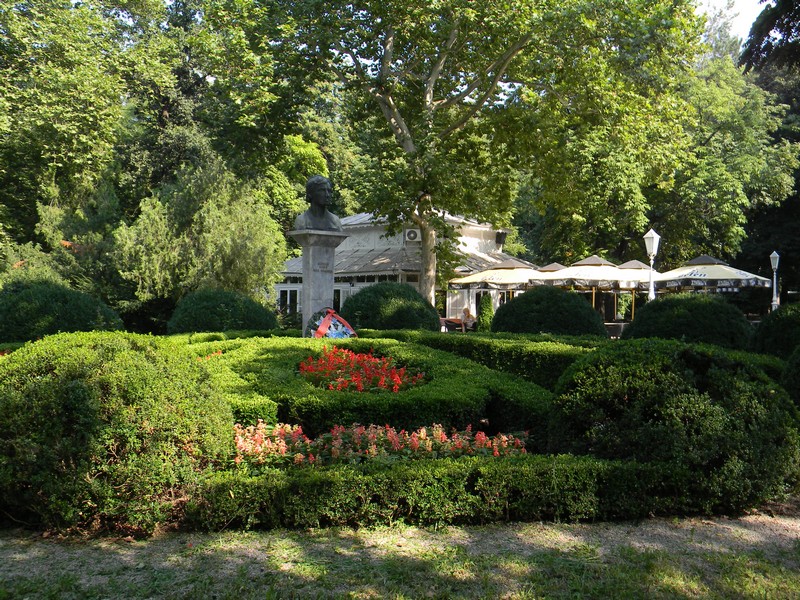
In the area where this green oasis stands today, the 18th century saw the country estate of the prominent Šeribl family of Vršac. The Vršac...
Read more
-
ANNEX OF THE CITY MUSEUM OF VRŠAC “PHARMACY ON THE STAIRS” – VRŠAC
At the corner of Kumanovska Street and Stevan Nemanja Street stands one of the most representative and oldest buildings of old Vršac—the first pharmacy in...
Read more -
Udaljeno 232 m
CITY HALL – Vršac
Vršac got the city hall after two communities have united in 1795. – Serbian Vršac and German Vršac – into one city. Since 1717. they...
Read more -
Udaljeno 261 m
WINE HOUSE “RAB” – Vršac
In Sterija’s house on the town square, the RAB – Wine House offers you a top wine list with 250 types of wine from all...
Read more -
Udaljeno 261 m
THE ORTHODOX CATHEDRAL OF ST. NICHOLAS – Vršac
The Orhodox temple in Vršac, built in 1785., during the time of bishoup Nikola Dimitrijević. The iconostasis was painted by Pavel Đurković and Aksentije Marković...
Read more -
Udaljeno 347 m
CITY LIBRARY – Vršac
The City Public and School Library was founded in 1887 by Felix Mileker. The Vršac City Library is one of the oldest in the country,...
Read more
-
Udaljeno 711 m
CULTURAL CENTER VRŠAC – Vršac
Cultural Center Vršac is a cultural institution founded by the Municipal Assembly of Vršac (2003). It was established with the aim of exploring the cultural...
Read more


-
Udaljeno 261 m
THE ORTHODOX CATHEDRAL OF ST. NICHOLAS – Vršac
The Orhodox temple in Vršac, built in 1785., during the time of bishoup Nikola Dimitrijević. The iconostasis was painted by Pavel Đurković and Aksentije Marković...
Read more -
Udaljeno 543 m
THE ROMAN CATHOLIC CHURCH OF ST. GERHARD – Vršac
The magnificent Roman – Catholic church, dedicated to St. Gerhard, was built in 1863. The church was built in a neo-gothic style with the rich...
Read more

-
Udaljeno 261 m
THE ORTHODOX CATHEDRAL OF ST. NICHOLAS – Vršac
The Orhodox temple in Vršac, built in 1785., during the time of bishoup Nikola Dimitrijević. The iconostasis was painted by Pavel Đurković and Aksentije Marković...
Read more -
Udaljeno 543 m
THE ROMAN CATHOLIC CHURCH OF ST. GERHARD – Vršac
The magnificent Roman – Catholic church, dedicated to St. Gerhard, was built in 1863. The church was built in a neo-gothic style with the rich...
Read more
-
Udaljeno 261 m
WINE HOUSE “RAB” – Vršac
In Sterija’s house on the town square, the RAB – Wine House offers you a top wine list with 250 types of wine from all...
Read more -
WINE CELLAR “VINIK” – Vršac
The family winery “Vinik” is located in the centre of the city of Vrsac, today the only registered wine cellar of 980 as there were...
Read more
-
Udaljeno 715 m
CITY PARK – Vršac
In the area where this green oasis stands today, the 18th century saw the country estate of the prominent Šeribl family of Vršac. The Vršac...
Read more