
MUSEUM OF VOJVODINA – Novi Sad
The Museum of Vojvodina is a widely branched institution, with a rich collection of around 400,000 items and a library holding over 50,000 publications. Its regular museum publication, ’Rad Muzeja Vojvodine’, has been issued since 1952 and was known as ’Rad vojvođanskih muzeja’ until 1994.
To establish an extensive museum network, branch locations were created—Ethno-House “Brvnara” in Bački Jarak and the Agricultural Museum in Kulpin, which has been part of the Museum since 2004.
The Museum of Vojvodina presents a comprehensive permanent exhibition, covering the development of human society in today’s Vojvodina over eight thousand years. On an area of 3,000 square meters, 6,000 representative exhibits are displayed from archaeology (Paleolithic to Antiquity), general history and art history (15th to the second half of the 20th century), and ethnology. The permanent exhibition provides a synthetic view of the region’s millennial past. Exhibited items trace human communities and cultures from the Paleolithic and Mesolithic, including the first human traces near Irig around 70,000 years ago, through Starčevo, Vinča, and other Neolithic cultures, the multi-layered sites of Gomolava, Feudvar, and Kalakača, to the mythical times of ancient Greece and the grand monuments of Imperial Rome, and from the migrations of people to the succession of ethnic communities—Slavic, Hungarian, Serbian, and others.
The first part of the permanent exhibition is accompanied by an extensive monograph of the Museum of Vojvodina. The second part, covering Vojvodina’s history from the mid-19th to mid-20th century, is located in the building of the former Historical Museum.
Three Roman ceremonial helmets are unique examples in Europe and have long been recognized as informal symbols of the Museum.
Numerous permanent exhibitions are also displayed elsewhere: a pedagogical exhibition at J. J. Zmaj Grammar School in Novi Sad; a memorial exhibition to historian and writer Jovan Rajić (1726–1801) in Kovilj Monastery; exhibitions dedicated to world-renowned scientist Mihajlo Pupin (1858–1935) in Idvor; local history museums in Čerević, Ruski Krstur, and Hrtkovci; in the birthplace of Miloš Crnjanski (1893–1977) and in the library in Čongrad, Hungary; in the birthplace of Dositej Obradović (1740–1811) in Čakov, Romania; the birthplace of Sava Tekelija in Arad, Romania; and in the Batina Battle Museum.
The Museum of Vojvodina also serves as the central authority for all institutions protecting movable cultural assets, museums, galleries, and collections in Vojvodina, overseeing their professional work.
Opening hours:
Tuesday – Thursday: 09:00–19:00
Saturday – Sunday: 10:00–18:00
Monday: closed
Nearby attractions
-

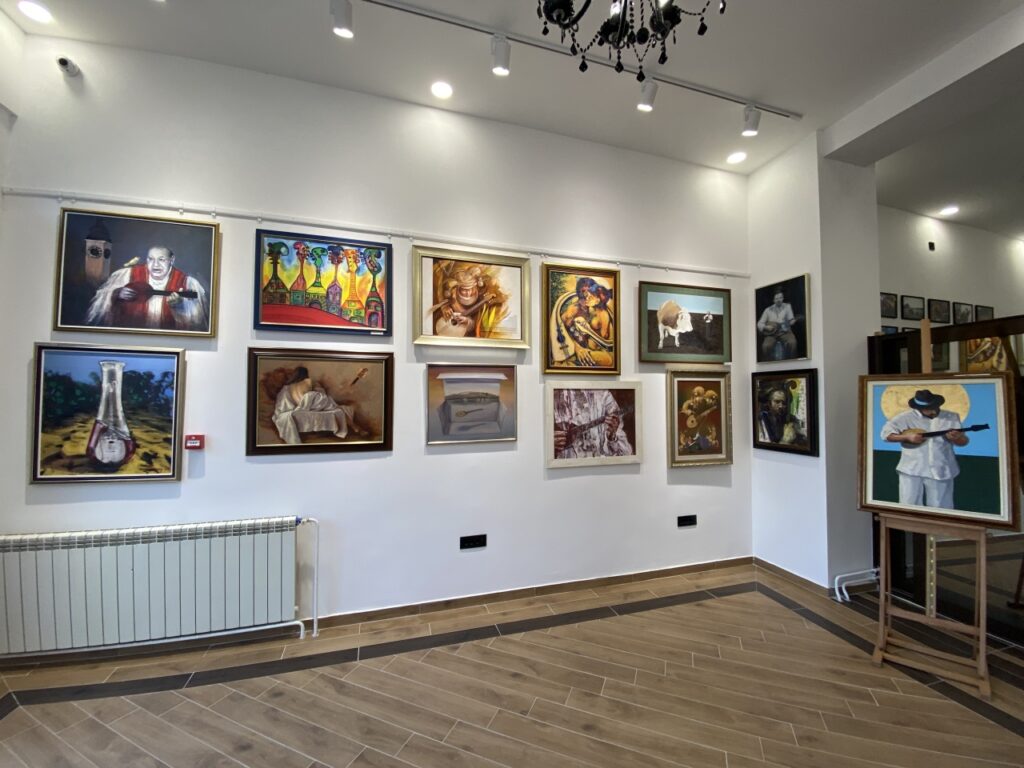
TAMBURICA FEST MUSEUM – NOVI SAD
Novi Sad has in recent years gained a new museum dedicated to “her majesty” – the tamburica. In celebration of the city’s title as European...
Read more
-
PAVLE BELJANSKI MEMORIAL COLLECTION – Novi Sad
The Pavle Beljanski Memorial Collection is a museum dedicated to Yugoslav modern art of the first half of the 20th century. The institution is named...
Read more -
Udaljeno 203 m
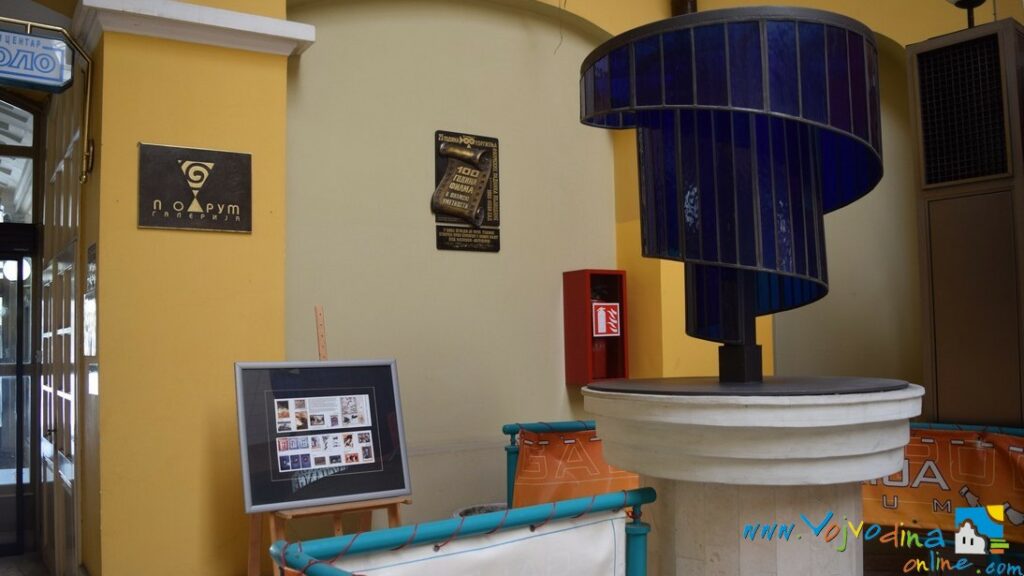
GALLERY OF MATICA SRPSKA – Novi Sad
The Matica Srpska Gallery, founded in 1847, is one of the oldest and richest art collections in our country. Its collection and permanent exhibition consist...
Read more


-

CAFE-CONFECTIONARY “CITY” – Novi Sad
“City” Café-confectionery makes a great variety of confectionery on order: cakes, small cakes, cookies, mashed chestnut, “zito” (a confectionery made of boiled wheat with nuts...
Read more -
Udaljeno 156 m
MOUNTAINEERING CLUB “ŽELEZNIČAR” – Novi Sad
Mountaineering club “Železničar” Novi Sad was founded on the 18 April 1951. The club is formed for the purpose of saving the environment and recreation...
Read more -
Udaljeno 180 m
SERBIAN NATIONAL THEATRE – Novi Sad
The Serbian National Theatre, the first professional theatre among the Serbs, was founded on July 16, 1861. Initially, performances were held in inadequate spaces, namely...
Read more -
Udaljeno 198 m
RESTAURANT “ATINA” – Novi Sad
“Atina” (Athens) is one of the biggest restaurants in Novi Sad with long tradition. It offers a great variety of meat specialties. Besides the dishes...
Read more

-
Udaljeno 156 m
MOUNTAINEERING CLUB “ŽELEZNIČAR” – Novi Sad
Mountaineering club “Železničar” Novi Sad was founded on the 18 April 1951. The club is formed for the purpose of saving the environment and recreation...
Read more
-
Udaljeno 197 m
THE ASSUMPTION CHURCH (USPENSKA CRKVA) – Novi Sad
There are testimonies that The Church of Assumption of Holy Mother of God existed even in 1731. The building from that time was made out...
Read more -
CATHOLIC PLEBANIJA – Novi Sad
The Plebanija was designed by Georg Efinger and built in 1808. The Plebanija is built in classical style with the elements of the late baroque....
Read more

-
Udaljeno 197 m
THE ASSUMPTION CHURCH (USPENSKA CRKVA) – Novi Sad
There are testimonies that The Church of Assumption of Holy Mother of God existed even in 1731. The building from that time was made out...
Read more -
CATHOLIC PLEBANIJA – Novi Sad
The Plebanija was designed by Georg Efinger and built in 1808. The Plebanija is built in classical style with the elements of the late baroque....
Read more
-
CAFE-CONFECTIONARY “CITY” – Novi Sad
“City” Café-confectionery makes a great variety of confectionery on order: cakes, small cakes, cookies, mashed chestnut, “zito” (a confectionery made of boiled wheat with nuts...
Read more -
Udaljeno 198 m
RESTAURANT “ATINA” – Novi Sad
“Atina” (Athens) is one of the biggest restaurants in Novi Sad with long tradition. It offers a great variety of meat specialties. Besides the dishes...
Read more
-
Udaljeno 180 m
SERBIAN NATIONAL THEATRE – Novi Sad
The Serbian National Theatre, the first professional theatre among the Serbs, was founded on July 16, 1861. Initially, performances were held in inadequate spaces, namely...
Read more
-
CAFE-CONFECTIONARY “CITY” – Novi Sad
“City” Café-confectionery makes a great variety of confectionery on order: cakes, small cakes, cookies, mashed chestnut, “zito” (a confectionery made of boiled wheat with nuts...
Read more -
Udaljeno 198 m
RESTAURANT “ATINA” – Novi Sad
“Atina” (Athens) is one of the biggest restaurants in Novi Sad with long tradition. It offers a great variety of meat specialties. Besides the dishes...
Read more
-
TAMBURICA FEST MUSEUM – NOVI SAD
Novi Sad has in recent years gained a new museum dedicated to “her majesty” – the tamburica. In celebration of the city’s title as European...
Read more -
Udaljeno 180 m
SERBIAN NATIONAL THEATRE – Novi Sad
The Serbian National Theatre, the first professional theatre among the Serbs, was founded on July 16, 1861. Initially, performances were held in inadequate spaces, namely...
Read more -
PAVLE BELJANSKI MEMORIAL COLLECTION – Novi Sad
The Pavle Beljanski Memorial Collection is a museum dedicated to Yugoslav modern art of the first half of the 20th century. The institution is named...
Read more -
Udaljeno 203 m
GALLERY OF MATICA SRPSKA – Novi Sad
The Matica Srpska Gallery, founded in 1847, is one of the oldest and richest art collections in our country. Its collection and permanent exhibition consist...
Read more
-
Udaljeno 156 m
MOUNTAINEERING CLUB “ŽELEZNIČAR” – Novi Sad
Mountaineering club “Železničar” Novi Sad was founded on the 18 April 1951. The club is formed for the purpose of saving the environment and recreation...
Read more