
“MAJDAN” ARCHAEOLOGICAL SITE – Majdan
The site in the village of Majdan, near the rural cemetery, is associated with the Christian Monastery of Saint George from the legend of Saint Gerhard. In a text from the early 14th century, an anonymous scribe describes the founding of the monastery and the campaign of the Hungarian king Stephen I (997–1038)’s commander, Csanád, against the Bulgarian ruler Ahtum. Ahtum ruled Banat and strongly resisted Stephen’s efforts to incorporate Banat into the early feudal Hungarian state. He was an ally of the Byzantines and was baptized in Vidin in 1004. During the 10th, 11th, and 12th centuries, the Byzantine Church exercised direct authority over many monasteries in southern Hungary, including Majdan, Sremska Mitrovica, Arača, Titel, Bač, and others. The founding date of the Majdan monastery can be estimated based on Gerhard’s biography. Gerhard, a Venetian appointed bishop of Morisena (Csanád) in 1030, visited the newly built monastery in Oroslanoš – Majdan. Based on these records, it is assumed that the monastery was built before the church schism, around 1016–1030. Sources indicate that about ten Greek monks lived in old Oroslanoš (Majdan). Official historical scholarship considers that the monastery was partially destroyed and abandoned by Greek monks after the Mongol–Tatar invasion of 1241. However, it continued to be restored and existed until the Ottoman conquest. While archival and historical sources can provide valuable information, the only definitive evidence of what lies on the hill in Majdan comes from archaeological excavations. After seven years of research, the following results were obtained: On an open area of 1,500 square meters and at depths ranging from 0.4 to 1.7 meters, the complete foundations of three churches were discovered. The churches were oriented east–west (altars to the east, entrances to the west). In the debris near the largest church, fragmentary floor and wall bricks were found, decorated with impressions of crosses, lions, monastery models, and various interlacing patterns in medallions (Romanesque elements), as well as rows of pseudo-granulations (Byzantine elements). The foundations of the large church were built atop the remains of a previous, fourth church, which has not yet been uncovered in prior excavations. Ceramics associated with this church date to the 11th–12th centuries. The foundation walls are 140–160 cm thick. The entrance featured two bell towers, and an eastern foundation indicates the location of the emperor’s gallery (empore). The external dimensions of the southern tower–bell tower are 406 × 406 cm, with a spacing of 340 cm between the towers (west portal zone). The width of the church’s western section is 12.52 meters, and its length is approximately 23 meters, although the apse was completely destroyed in later looting. Archaeological studies show that this church was exceptionally large, unmatched within a radius of about 100 kilometers. The only comparable church in terms of dimensions is the younger church at Arača near Novi Bečej. The foundations of the second, younger church, with a polygonal sanctuary, lie just below the surface at a depth of about 30 cm. This smaller church’s polygonal apse contains reused bricks from the older large church, indicating that materials were repurposed. Movable finds (ceramics) date this church to the 13th century. The earliest church discovered at Majdan is a dug-in-earth structure (zemljanka), with foundations made of compacted yellow earth and only the apse paved with bricks. Like the other two churches, it is oriented east–west and is small, measuring 9 meters long and 4.5 meters wide. Ceramics found with its foundations date it to the early 11th century. At Majdan, archaeologists also discovered the foundation of a wall enclosing the churches and residential buildings – parts of the monastic complex (konak). A necropolis was found with 460 in-situ skeletal graves and over 1,000 secondary burials. Reconnaissance suggests the cemetery contains approximately 3,000 graves. Graves are oriented west–east (heads to the west, feet to the east), and many preserved traces of coffin boards. The necropolis belongs to the typical Belobrdska culture cemeteries, specifically its later phase. Based on grave goods and coins, the cemetery dates to the 11th–12th centuries. Common grave offerings include ‘S’-shaped buckles, twisted wire rings, strap-shaped rings, and necklaces. Coins were mostly placed in the mouths of the deceased, typically belonging to kings Solomon (1063–1074), Coloman (1095–1116), and Béla II (1131–1141). Five brick-and-adobe tombs were documented; the most significant was discovered in 2006. This unique tomb, larger than the others, had a double-vaulted floor with perforations, likely serving as a preparation tomb for ossuary interments. Archaeological research has confirmed the existence of four churches, a large necropolis, and traces of dense settlement at Majdan during the 11th–12th centuries. Movable finds indicate continuous habitation from the 11th to the 15th century. So far, archaeological evidence aligns with historical sources and legends. The sacred complex at Majdan is an exceptionally valuable archaeological site and is protected as a cultural monument by the state.
Nearby attractions
-

“MAJDAN” ARCHAEOLOGICAL SITE – Majdan
The site in the village of Majdan, near the rural cemetery, is associated with the Christian Monastery of Saint George from the legend of Saint...
Read more -
Udaljeno 525 m
“BRANISLAV NUŠIĆ” PUBLIC LIBRARY – Novi Kneževac
The Branislav Nušić” library is located in the building of the noble mansion of the Maldegem family, situated within a protected park, just like the...
Read more -
 Udaljeno 3.7 km
“CNESA” EDUCATIONAL & CULTURAL CENTER – Kanjiža
Working Hours: Monday–Friday: 07:00–15:00 Weekend: Closed
Read more


-
Udaljeno 3.2 km
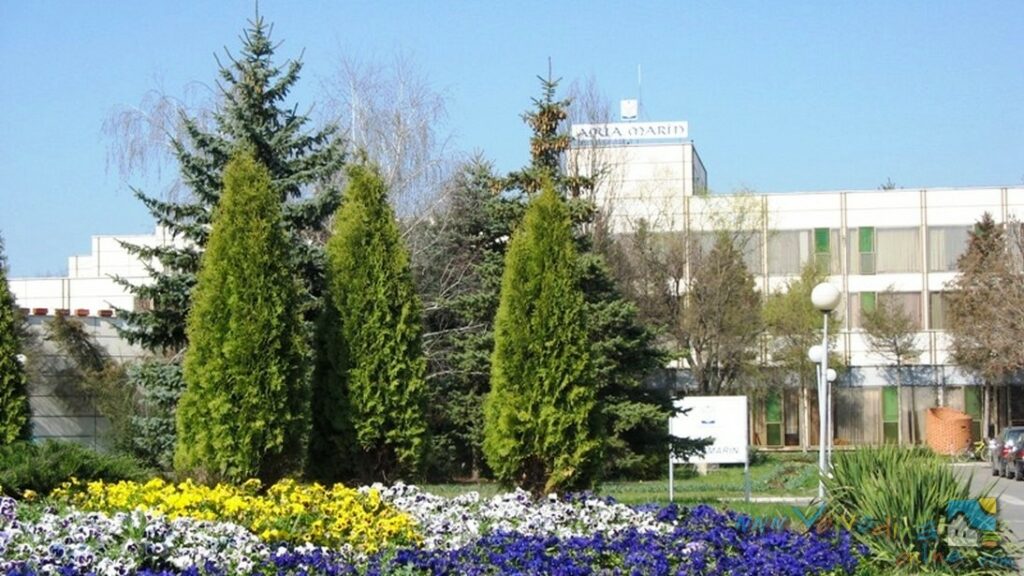
SPA KANJIŽA – Kanjiža
Over more than nine decades, the spa “Kanjiža” has developed into a modern Institute for Rehabilitation. It offers the hospitality to those who need rest,...
Read more
-
Udaljeno 525 m
“BRANISLAV NUŠIĆ” PUBLIC LIBRARY – Novi Kneževac
The Branislav Nušić” library is located in the building of the noble mansion of the Maldegem family, situated within a protected park, just like the...
Read more
-
“MAJDAN” ARCHAEOLOGICAL SITE – Majdan
The site in the village of Majdan, near the rural cemetery, is associated with the Christian Monastery of Saint George from the legend of Saint...
Read more
-
“MAJDAN” ARCHAEOLOGICAL SITE – Majdan
The site in the village of Majdan, near the rural cemetery, is associated with the Christian Monastery of Saint George from the legend of Saint...
Read more -
Udaljeno 0 m
OLD PARK – Novi Kneževac
In the far north of Banat, on the left bank of the Tisa river stretches Novi Kneževac park. Together with the palaces of noble families...
Read more -
Udaljeno 659 m
THE ROMAN CATHOLIC CHURCH OF ST. GEORGE – Novi Kneževac
The building of the church started in 1847., and finished in 1858., and carries the classicism style characteristics. In the base it is the one...
Read more -
Udaljeno 857 m
CHURCH OF THE HOLY ARCHANGELS MICHAEL AND GABRIEL – Novi Kneževac
The Serbian orthodox church of St. Archangel Michel and Gabriel in Novi Kneževac, according to the written sources, was built in 1755. as it is...
Read more -
Udaljeno 3.2 km
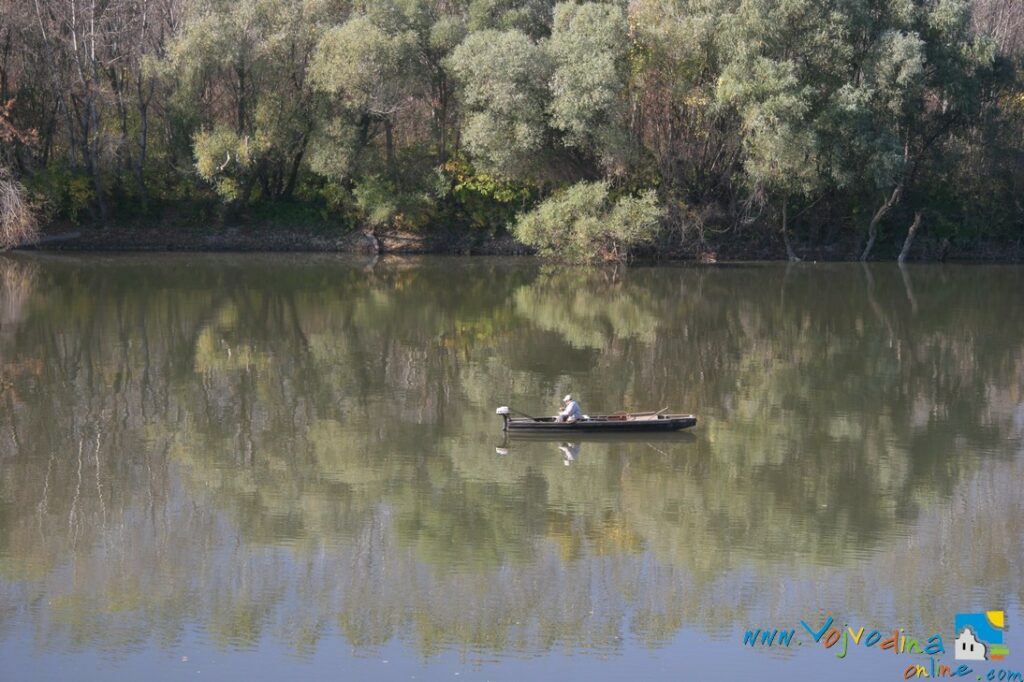
HUNTING GROUND “KAPETANSKI RIT” – Kanjiža
The Hunting Association “Kapetanski rit”,is located in Kanjiža, and managed by the Hunting Association “Kapetanski rit “, spreading on the total area of 39 856...
Read more -
Udaljeno 3.7 km
“CNESA” EDUCATIONAL & CULTURAL CENTER – Kanjiža
Working Hours: Monday–Friday: 07:00–15:00 Weekend: Closed
Read more
-
Udaljeno 3.7 km
“CNESA” EDUCATIONAL & CULTURAL CENTER – Kanjiža
Working Hours: Monday–Friday: 07:00–15:00 Weekend: Closed
Read more
-
Udaljeno 3.2 km
HUNTING GROUND “KAPETANSKI RIT” – Kanjiža
The Hunting Association “Kapetanski rit”,is located in Kanjiža, and managed by the Hunting Association “Kapetanski rit “, spreading on the total area of 39 856...
Read more
-
Udaljeno 659 m
THE ROMAN CATHOLIC CHURCH OF ST. GEORGE – Novi Kneževac
The building of the church started in 1847., and finished in 1858., and carries the classicism style characteristics. In the base it is the one...
Read more -
Udaljeno 857 m
CHURCH OF THE HOLY ARCHANGELS MICHAEL AND GABRIEL – Novi Kneževac
The Serbian orthodox church of St. Archangel Michel and Gabriel in Novi Kneževac, according to the written sources, was built in 1755. as it is...
Read more
-
Udaljeno 659 m
THE ROMAN CATHOLIC CHURCH OF ST. GEORGE – Novi Kneževac
The building of the church started in 1847., and finished in 1858., and carries the classicism style characteristics. In the base it is the one...
Read more -
Udaljeno 857 m
CHURCH OF THE HOLY ARCHANGELS MICHAEL AND GABRIEL – Novi Kneževac
The Serbian orthodox church of St. Archangel Michel and Gabriel in Novi Kneževac, according to the written sources, was built in 1755. as it is...
Read more
-
Udaljeno 0 m
OLD PARK – Novi Kneževac
In the far north of Banat, on the left bank of the Tisa river stretches Novi Kneževac park. Together with the palaces of noble families...
Read more
-
Udaljeno 0 m
OLD PARK – Novi Kneževac
In the far north of Banat, on the left bank of the Tisa river stretches Novi Kneževac park. Together with the palaces of noble families...
Read more
-
Udaljeno 3.2 km
HUNTING GROUND “KAPETANSKI RIT” – Kanjiža
The Hunting Association “Kapetanski rit”,is located in Kanjiža, and managed by the Hunting Association “Kapetanski rit “, spreading on the total area of 39 856...
Read more