
LOCAL HISTORY MUSEUM – Ruma
The building of the Local History Museum in Ruma, protected as a state cultural monument of great importance, is the oldest and first two-story structure in the town. It dates back to 1772 and, together with the Roman Catholic Church built in 1813 and the parish residence from 1815, forms a unique and authentic urban architectural ensemble of the city. All three buildings were endowed by the Pejačević family.
In his 1762 will, the founder of Ruma, Marko Aleksandar Baron Pejačević, instructed his heir Josip, allocating the necessary funds, to build a confessional school in the town “for Roman Catholic and Orthodox children from the Ruma and Ilok estates.” Based on a plan by an as-yet unknown Viennese architect, construction was carried out first by the master builder Johan Mane from Petrovaradin, and then completed by the mason Mihael Vajhman. In this way, the last wish of Baron Pejačević was fulfilled, and Ruma gained an impressive school building for that time.
Over the past two and a half centuries, the building has continuously served education, culture, and the spiritual development of the community. Throughout its long history, it accommodated various educational needs, functioning as a primary, drawing, craft, and music school. For the past six decades, it has housed the Museum, which, since 1986 when the music school moved out, has been the sole occupant of this historic building.
The Local History Museum in Ruma was established by decision of the Ruma Municipal People’s Committee in 1962 as the Local Museum Collection. Ten years later, in 1972, it was renamed the Museum of Ruma, and in 1979 it received its current name.
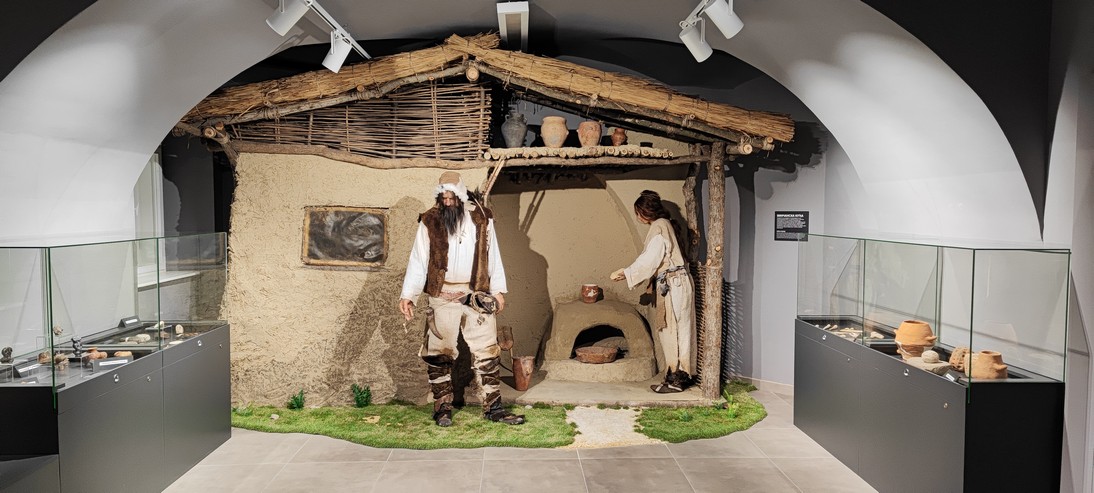
The museum is a complex-type local institution, comprising departments of archaeological, ethnological, historical, and art collections, as well as a documentation department with a library. Its collection also includes eight legacies: Milivoj Nikolajević, Dr. Roman Soretić, Fedor Feđa Soretić, Branislav Makeš, Branka Kolundžić, Milan Besarabić, Dr. Milan Mićić, and Dragan Tomašević. The museum’s specialized library holds approximately 2,500 units.
At the beginning of the 21st century, the museum intensified its publishing and exhibition activities, producing informative catalogs for each exhibition, monographic publications, and annually publishing the Proceedings of the Local History Museum, first issued in 1997.
The “Borkovac” Art Colony, founded in 1968, is one of the oldest in the country. Its founder and long-time organizer was Milivoj Nikolajević, director of the Matica Srpska Gallery. Supported by the Municipality of Ruma until 1990 and organized by the Local History Museum of Ruma since 1995, the colony awards the Milivoj Nikolajević Plaque to the most successful artist each year. Over 48 editions, more than 250 artists have participated, and the colony has achieved international status seven times, hosting painters from countries such as Japan, Bulgaria, Russia, Croatia, and Slovenia. Works created during the colony are part of the museum’s annual exhibition program.
The museum’s collections have expanded with new items, and collaboration has grown with related institutions in Serbia and abroad, as well as with educational institutions in Ruma and surrounding areas. These efforts have increased visitor numbers. During the first two decades of the 21st century, the museum focused on improving technical and technological conditions.
In recognition of its professional achievements, the Local History Museum Ruma received the Mihajlo Valtrović Award in 2017 from the Museum Association of Serbia.
The museum aims to be a favorite destination for residents of Ruma and Srem, as well as visitors from Serbia and abroad, offering insight into the region and its uniqueness. Through cultural heritage, both tangible and intangible, and its museum artifacts—archaeological, ethnological, and artistic—the museum engages with both the professional community and the general public, actively contributing to societal development.
Opening hours:
Monday – Friday: 8:00 AM – 7:30 PM
Saturday: 9:00 AM – 3:00 PM
Sunday: Closed (except for scheduled groups)
Admission is free.

Nearby attractions
-

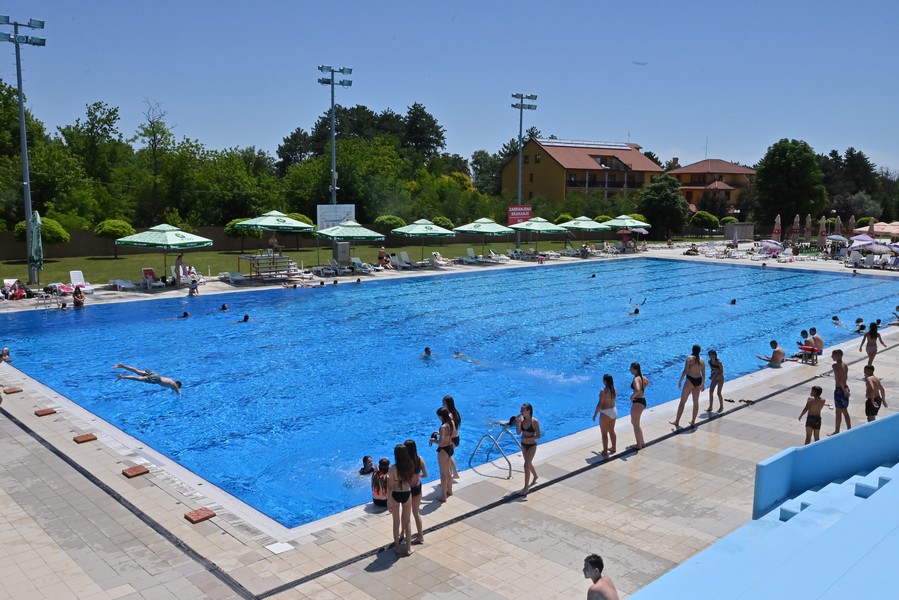
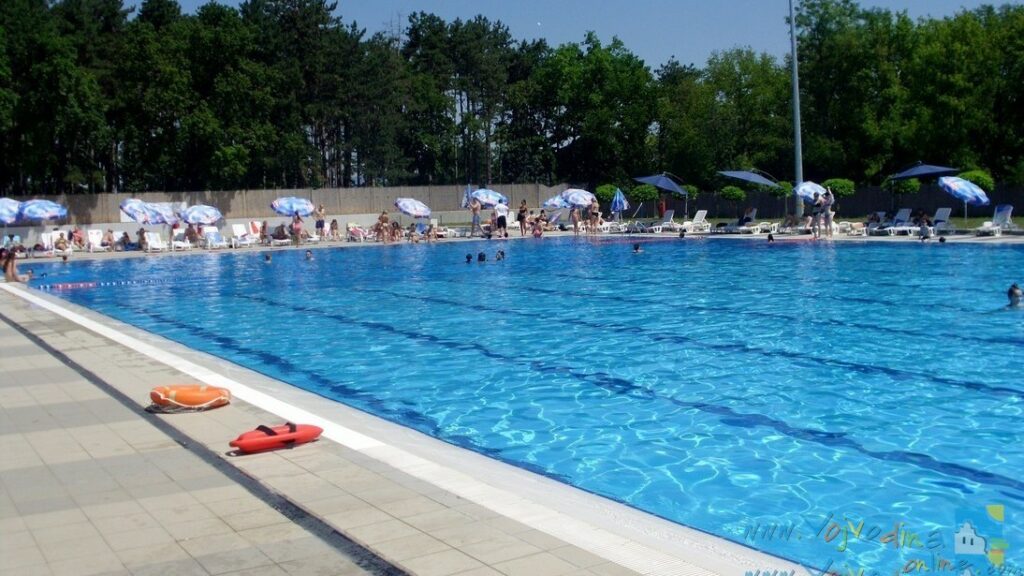
BORKOVAC SWIMMING POOL – Ruma
The Olympic swimming pool, together with its accompanying facilities, meets all requirements for hosting top-level swimming competitions and water polo matches. As an outdoor facility,...
Read more
-

“ATANASIJE STOJKOVIĆ” CITY LIBRARY – Ruma
The first Serbian Reading Room in Ruma began its work in 1861. It was destroyed and rebuilt several times, and its continuous operation was established...
Read more

-
 Udaljeno 316 m
SPORTS CENTER RUMA – Ruma
The Sports Centre complex spreads on the surface area of 6167.01 m². consisting of a large hall, automatic bowling alley, fitness center, judo hall, small...
Read more
-
Udaljeno 351 m
THE CHURCH OF THE ASCENSION OF THE LORD – Ruma
In the first years of Nova Ruma their orthodox citizens were using the old church of Stara Ruma, and soon it became too small for...
Read more

-
Udaljeno 253 m
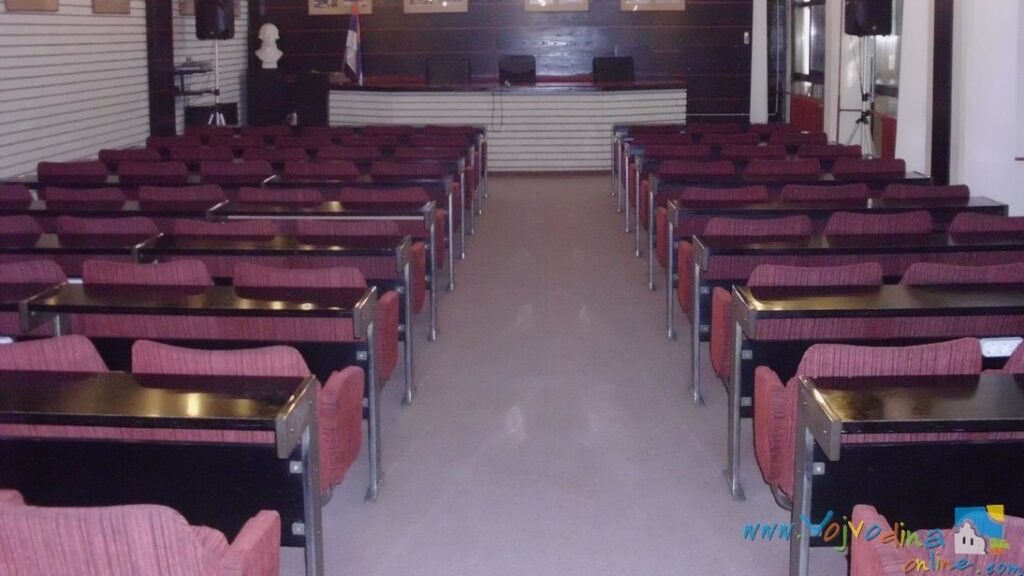
CULTURAL CENTER – Ruma
The Cultural Center Ruma began operations on October 27, 1985, in a newly constructed, modern building covering 3,600 m². The activities of the Cultural Center...
Read more
-
BORKOVAC SWIMMING POOL – Ruma
The Olympic swimming pool, together with its accompanying facilities, meets all requirements for hosting top-level swimming competitions and water polo matches. As an outdoor facility,...
Read more -
Udaljeno 316 m
SPORTS CENTER RUMA – Ruma
The Sports Centre complex spreads on the surface area of 6167.01 m². consisting of a large hall, automatic bowling alley, fitness center, judo hall, small...
Read more
-
Udaljeno 351 m
THE CHURCH OF THE ASCENSION OF THE LORD – Ruma
In the first years of Nova Ruma their orthodox citizens were using the old church of Stara Ruma, and soon it became too small for...
Read more
-
Udaljeno 351 m
THE CHURCH OF THE ASCENSION OF THE LORD – Ruma
In the first years of Nova Ruma their orthodox citizens were using the old church of Stara Ruma, and soon it became too small for...
Read more
-
Udaljeno 456 m
VINOTEKA VINA GLASS – RUMA
Enoteca Vina glass is something completely new and completely different in Ruma! What differs us from the others is the fact that in the same...
Read more -
 Udaljeno 686 m
RESTAURANT “BASSIANA” – Ruma
In a pleasant ambience, with affable staff and refined music, you will surely enjoy the delicious food offered by “Bassiana” Restaurant.
Read more


-
Udaljeno 686 m
RESTAURANT “BASSIANA” – Ruma
In a pleasant ambience, with affable staff and refined music, you will surely enjoy the delicious food offered by “Bassiana” Restaurant.
Read more
-
Udaljeno 253 m
CITY THEATRE RUMA – Ruma
City Theatre Ruma was founded in 1994 with the goal of engaging in creative activities in the field of culture. Initially, it maintained a classical...
Read more

-
Udaljeno 686 m
RESTAURANT “BASSIANA” – Ruma
In a pleasant ambience, with affable staff and refined music, you will surely enjoy the delicious food offered by “Bassiana” Restaurant.
Read more
-
LOCAL HISTORY MUSEUM – Ruma
The building of the Local History Museum in Ruma, protected as a state cultural monument of great importance, is the oldest and first two-story structure...
Read more -
“ATANASIJE STOJKOVIĆ” CITY LIBRARY – Ruma
The first Serbian Reading Room in Ruma began its work in 1861. It was destroyed and rebuilt several times, and its continuous operation was established...
Read more -
Udaljeno 253 m
CITY THEATRE RUMA – Ruma
City Theatre Ruma was founded in 1994 with the goal of engaging in creative activities in the field of culture. Initially, it maintained a classical...
Read more -
Udaljeno 253 m
CULTURAL CENTER – Ruma
The Cultural Center Ruma began operations on October 27, 1985, in a newly constructed, modern building covering 3,600 m². The activities of the Cultural Center...
Read more

-
LOCAL HISTORY MUSEUM – Ruma
The building of the Local History Museum in Ruma, protected as a state cultural monument of great importance, is the oldest and first two-story structure...
Read more
-
Udaljeno 456 m
VINOTEKA VINA GLASS – RUMA
Enoteca Vina glass is something completely new and completely different in Ruma! What differs us from the others is the fact that in the same...
Read more