
“KOTARKA” MUSEUM – Novo Miloševo
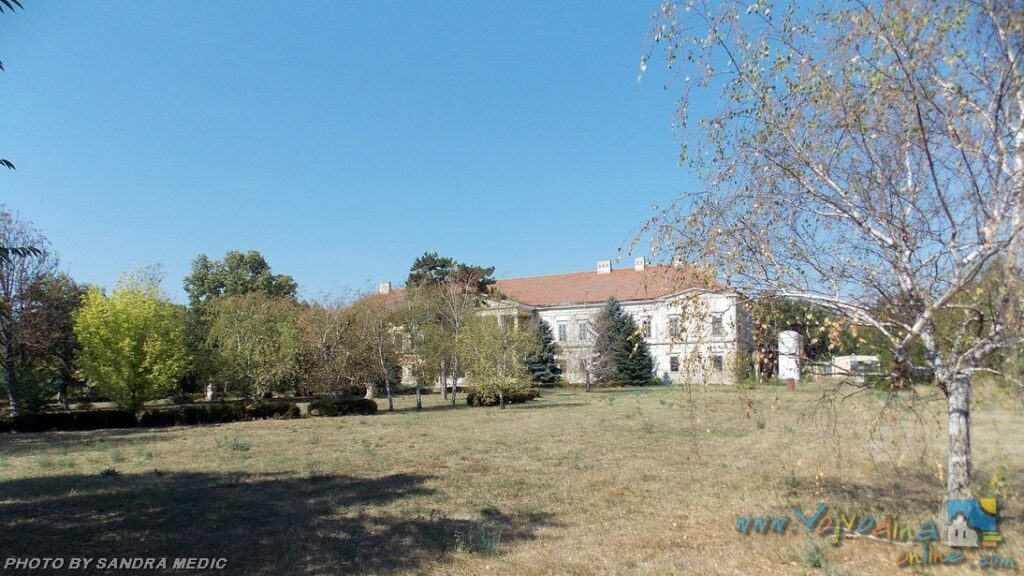
The “Kotarka” Local History Museum in Novo Miloševo is located in a building that is part of the castle complex of the Karačonji count family. In 1781, Bogdan Karačonji purchased the Beodra estate (today part of Novo Miloševo) from the Viennese court for 105,000 forints.
By 1805, Beodra gained the status of a small town, triggering intensive construction. During the 19th century, over 50 buildings were erected on the estate, including two grand neoclassical castles (the older one, built in 1841, has been preserved), a mausoleum-style church built in 1841, and a large granary with associated economic buildings from 1834.
Among the economic buildings is the “Kotarka”—originally a corn storage facility—which, after partial repurposing at the end of the 19th century, retained its authentic appearance. Neoclassical elements and numerous Doric columns fully reflect the stylistic features of the complex, making the building unique.
The idea of transforming the “Kotarka” building into a Local History Museum began in 1994 with the preparation of technical documentation. From then on, intensive collection of artifacts for the future local history collection began, which now numbers over 4,500 items.
Reconstruction work on the building started in 2001 and has continued to the present day. By late 2006, part of the building was completed, featuring three exhibition halls, a restroom, and an office-depot.
The first hall presents the urban and architectural development of Novo Miloševo, the Karačonji family, three church parishes (two Serbian Orthodox and one Roman Catholic), commerce, crafts, a children’s corner, and items related to the fire brigade founded in 1889. A special section displays two replicas: a civic girl’s ball gown and the uniform of Andor Karačonji’s servant. This section also includes documents related to the lives and work of two of Novo Miloševo’s most notable residents: Dr. Đorđe Joanović (1871–1932), a founder of the Medical Faculty in Belgrade, and Teodor Pavlović (1804–1854), a journalist and restorer of Matica Srpska.
The second hall is dedicated to textile crafts and household items. Carpets (19th–20th century) of “single” and “double-faced” types with geometric and floral motifs, towels, parts of traditional costumes, gold embroidery, items from a girl’s trousseau—frame, loom, distaff, cotton reels, embroidery tools, kitchen utensils, and more—form a cohesive thematic display.
The third hall showcases a guest/front room with a bed, bench, table and chairs, wardrobe and chest, rugs and carpets, and other period details that illustrate the life of a “gazdačka” (landowning) family in the late 19th century. The room also contains a Slava icon between two windows, framed family photographs, and a pendulum clock.
Another section of the “Kotarka,” with an authentic wooden structure, was reconstructed in 2011 and is entirely dedicated to agriculture. It contains a long wooden cart, kitchenware, a summer kitchen with all food preparation items, sleighs, and small agricultural tools. Agricultural machinery and tools—carts, grain thrashers, scales, plows, wine barrels, grain dusting machines, flour boxes, funeral carts—along with numerous photographs, illustrate the development of agriculture during the 19th and 20th centuries.
Working hours: 8 AM – 3 PM (on weekdays, by prior arrangement).
Nearby attractions
-
 Udaljeno 1.6 km
THE CHURCH OF ST. ARCHANGEL IN DRAGUTINOVO – Novo Miloševo
The settlement was inhabited in 1752., under the name Karlovo, because of the Austrian Emperor Karlo VI. After the First World War it got the...
Read more -
Udaljeno 1.6 km
THE CHURCH OF ST. MAGDALENE IN BEODRA – Novo Miloševo
The Roman Catholic Church of St. Magdalena was built in the period from 1838. to 1842. with the founder Karačonji family – the landowners. The...
Read more

-

“KOTARKA” MUSEUM – Novo Miloševo
The “Kotarka” Local History Museum in Novo Miloševo is located in a building that is part of the castle complex of the Karačonji count family....
Read more -

“KARAČONJI” CASTLE – Novo Miloševo
It was built in 1857 by Lajoš Karačoni on his estate in Beodra (today a part of Novo Miloševo) as a representative residential building that,...
Read more -
BANAT CULTURAL CENTER – Novo Miloševo
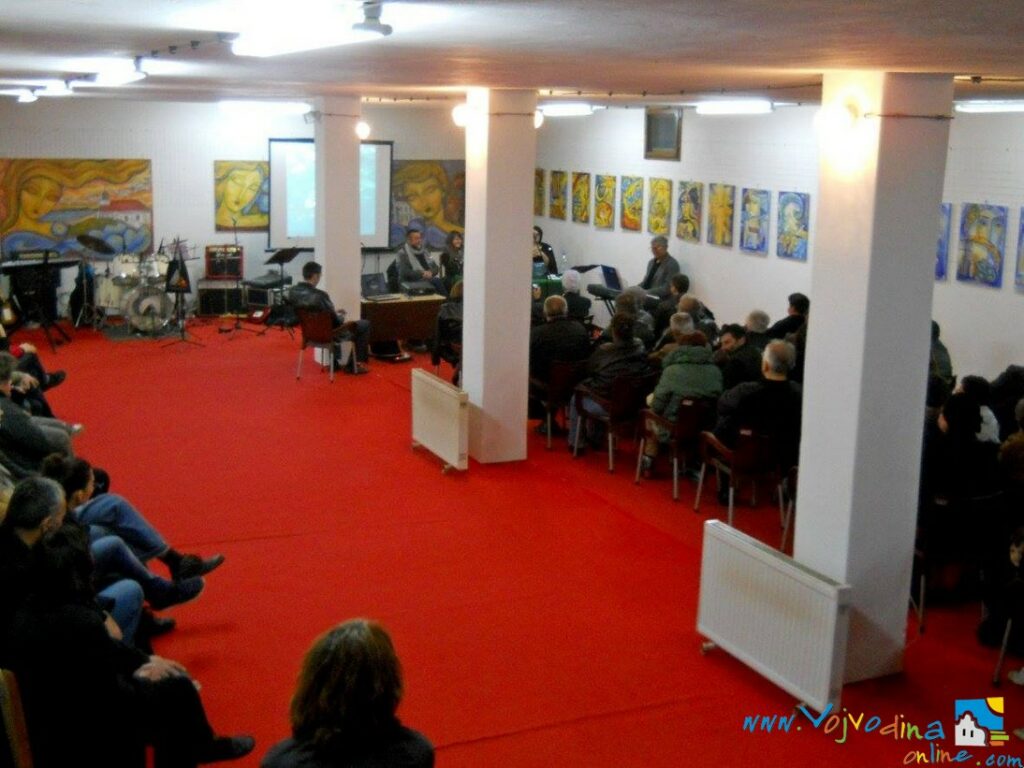
The Banat Cultural Center is the first private cultural center in Serbia. This family-run creative enterprise engages in artistic creation, production, and various cultural activities....
Read more -

-
“KOTARKA” MUSEUM – Novo Miloševo
The “Kotarka” Local History Museum in Novo Miloševo is located in a building that is part of the castle complex of the Karačonji count family....
Read more
-
“KARAČONJI” CASTLE – Novo Miloševo
It was built in 1857 by Lajoš Karačoni on his estate in Beodra (today a part of Novo Miloševo) as a representative residential building that,...
Read more
-
Udaljeno 1.6 km
THE CHURCH OF ST. ARCHANGEL IN DRAGUTINOVO – Novo Miloševo
The settlement was inhabited in 1752., under the name Karlovo, because of the Austrian Emperor Karlo VI. After the First World War it got the...
Read more -
Udaljeno 1.6 km
THE CHURCH OF ST. MAGDALENE IN BEODRA – Novo Miloševo
The Roman Catholic Church of St. Magdalena was built in the period from 1838. to 1842. with the founder Karačonji family – the landowners. The...
Read more
-
BANAT CULTURAL CENTER – Novo Miloševo
The Banat Cultural Center is the first private cultural center in Serbia. This family-run creative enterprise engages in artistic creation, production, and various cultural activities....
Read more
-
Udaljeno 1.6 km
THE CHURCH OF ST. ARCHANGEL IN DRAGUTINOVO – Novo Miloševo
The settlement was inhabited in 1752., under the name Karlovo, because of the Austrian Emperor Karlo VI. After the First World War it got the...
Read more -
Udaljeno 1.6 km
THE CHURCH OF ST. MAGDALENE IN BEODRA – Novo Miloševo
The Roman Catholic Church of St. Magdalena was built in the period from 1838. to 1842. with the founder Karačonji family – the landowners. The...
Read more