
“DAMASKIN” CASTLE – Hajdučica
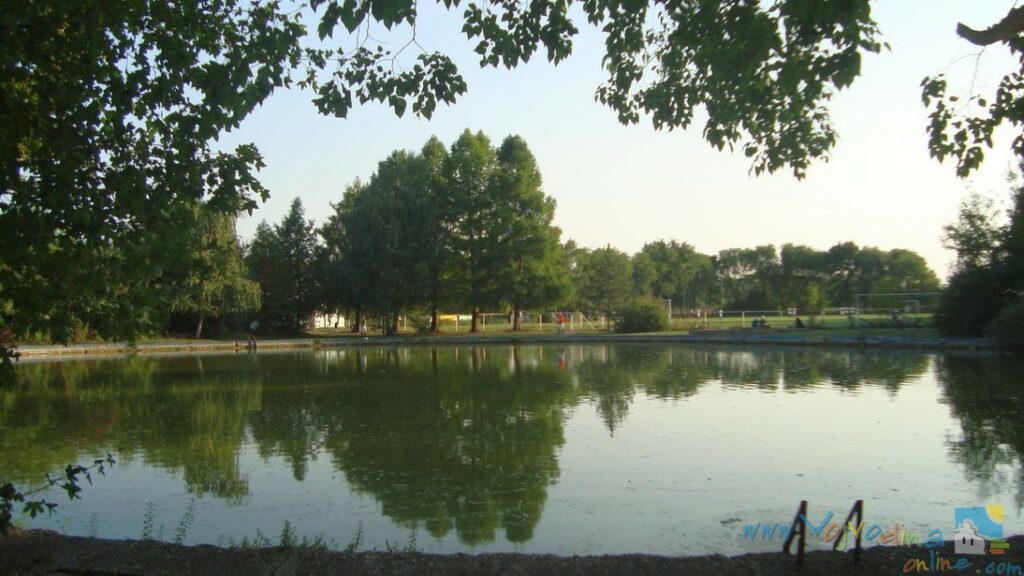
A century-old—or perhaps even two-centuries-old—park with several truly rare trees, a castle at its center, and a lake known as the “Ribnjak,” (‘Fishpond’) stand as witnesses to times past.
According to official records on the basis of which the Hajdučica Castle, together with its park, was placed under state protection as a cultural monument, it was built in 1911. It was constructed by Lazar Dunđerski and given as a dowry to his daughter Olga. However, according to Professor Mihal Rapoš and the curator of the Vršac Museum, Feliks Mileker, the castle was built at the beginning of the 19th century. Professor Rapoš writes that the original settlement was relocated in 1824 due to flooding, moving to its present location closer to the manor. The same author further states that the founder of the village, Istvan Damaskin, at the end of the 19th century—more precisely in 1890—sold his estate, including the castle, park, vineyard, orchard, and forest, to the Dunđerski family for 960,000 gold coins.
The present appearance is the result of alterations and adaptations carried out by the last owners, the Dunđerski family. The castle building is situated within a spacious park, about one kilometer from the road to Vršac. It was built as a residential property and bears all the characteristics that confirm this purpose. The surrounding park is well preserved and features elements of a professionally designed landscape with carefully maintained vegetation.
After nationalization in 1945, the estate was placed under the management of the agricultural enterprise “Agrobanat.” The orchard and vineyard no longer exist, but the castle, the park with its lake and forest, remain.
Today, the building serves as the headquarters of the agricultural company PDP “Hajdučica,” and the structure itself is in excellent condition. The castle is a cultural monument of great importance.
The castle is not open to visitors.
The nature park of the castle spreading on 3.7 hectares is one of the most preserved valuable representatives of garden art from the beginning of the 20th century on the territory of Vojvodina and Serbia. It is a typical example of mixed style, which dominated in garden architecture of that time, created by combining elements of classical and landscape style. Inside the park nice specimens of common oak, white poplars, maple, maple silver linden and milt have been preserved. It has been classified in goods of great importance.
Nearby attractions
-

“DAMASKIN” CASTLE – Hajdučica
A century-old—or perhaps even two-centuries-old—park with several truly rare trees, a castle at its center, and a lake known as the “Ribnjak,” (‘Fishpond’) stand as...
Read more -
 Udaljeno 7.7 km
“DANIJEL VLADISLAV” CASTLE – Konak
When traveling from Zrenjanin toward Vršac and entering the village of Konak, about one hundred meters before the bridge over the Brzava River, on the...
Read more

-
Udaljeno 7.7 km
“DANIJEL VLADISLAV” CASTLE – Konak
When traveling from Zrenjanin toward Vršac and entering the village of Konak, about one hundred meters before the bridge over the Brzava River, on the...
Read more
-
“DAMASKIN” CASTLE – Hajdučica
A century-old—or perhaps even two-centuries-old—park with several truly rare trees, a castle at its center, and a lake known as the “Ribnjak,” (‘Fishpond’) stand as...
Read more -
Udaljeno 0 m
THE MONASTERY OF ST. MICHAEL THE ARCHANGEL – Hajdučica
The monastery of St Archangel Mihajlo with the orthodox church in Hajdučica which was built by Olga Jovanović as her legacy in the period of...
Read more -
Udaljeno 7.7 km
“DANIJEL VLADISLAV” CASTLE – Konak
When traveling from Zrenjanin toward Vršac and entering the village of Konak, about one hundred meters before the bridge over the Brzava River, on the...
Read more -
 Udaljeno 9.0 km
VINEYARD-RESORT “BANATSKI BISER” (PEARL OF BANAT) – Ilandža
A vineyard-tourist complex “Banatski biser” offers a new way of tourism, wine tourism and catering services. On the map of the wine pathway through Vojvodina,...
Read more -

THE CHURCH OF ST. NICHOLAS – Ilandža
The temple was built during the Hungarian rebellion in 1848. This architectonic building was restored in 1852-1854., and it was put under the protection as...
Read more -
Udaljeno 9.6 km
CATHOLIC CHURCH – Jermenovci
The Catholic Church in Jermenovci was built in 1866. It is dedicated to the Holy Anne, mother of the Mother of God and it is...
Read more


-
Udaljeno 0 m
THE MONASTERY OF ST. MICHAEL THE ARCHANGEL – Hajdučica
The monastery of St Archangel Mihajlo with the orthodox church in Hajdučica which was built by Olga Jovanović as her legacy in the period of...
Read more
-
Udaljeno 12.5 km
CULTURAL AND EDUCATIONAL CENTRE “VUK KARADŽIĆ” – Plandište
The Cultural and Educational Center “Vuk Karadžić” in Plandište is a basic cultural institution whose work is guided by three strategic goals: engagement, creativity, and...
Read more
-
Udaljeno 9.0 km
VINEYARD-RESORT “BANATSKI BISER” (PEARL OF BANAT) – Ilandža
A vineyard-tourist complex “Banatski biser” offers a new way of tourism, wine tourism and catering services. On the map of the wine pathway through Vojvodina,...
Read more -
Udaljeno 12.9 km
HUNTING IN PLANDIŠTE MUNICIPALITY
Hunting area: 36,000 ha. Types of game: deer, hare, pheasant, quail, roebuck Hunting Association “Brzava”is in charge of the hunting ground and it has eight...
Read more
-
Udaljeno 0 m
HUNGARIAN CATHOLIC CHURCH – Hajdučica
Church from the 19th century with important architectural value.
Read more -
Udaljeno 0 m
THE MONASTERY OF ST. MICHAEL THE ARCHANGEL – Hajdučica
The monastery of St Archangel Mihajlo with the orthodox church in Hajdučica which was built by Olga Jovanović as her legacy in the period of...
Read more -
THE CHURCH OF ST. NICHOLAS – Ilandža
The temple was built during the Hungarian rebellion in 1848. This architectonic building was restored in 1852-1854., and it was put under the protection as...
Read more -
Udaljeno 9.6 km
CATHOLIC CHURCH – Jermenovci
The Catholic Church in Jermenovci was built in 1866. It is dedicated to the Holy Anne, mother of the Mother of God and it is...
Read more
-
Udaljeno 9.0 km
VINEYARD-RESORT “BANATSKI BISER” (PEARL OF BANAT) – Ilandža
A vineyard-tourist complex “Banatski biser” offers a new way of tourism, wine tourism and catering services. On the map of the wine pathway through Vojvodina,...
Read more
-
Udaljeno 0 m
HUNGARIAN CATHOLIC CHURCH – Hajdučica
Church from the 19th century with important architectural value.
Read more -
THE CHURCH OF ST. NICHOLAS – Ilandža
The temple was built during the Hungarian rebellion in 1848. This architectonic building was restored in 1852-1854., and it was put under the protection as...
Read more -
Udaljeno 9.6 km
CATHOLIC CHURCH – Jermenovci
The Catholic Church in Jermenovci was built in 1866. It is dedicated to the Holy Anne, mother of the Mother of God and it is...
Read more
-
Udaljeno 9.0 km
VINEYARD-RESORT “BANATSKI BISER” (PEARL OF BANAT) – Ilandža
A vineyard-tourist complex “Banatski biser” offers a new way of tourism, wine tourism and catering services. On the map of the wine pathway through Vojvodina,...
Read more -
Udaljeno 14.2 km
WINE CELLAR OF BLACKBERRY WINE “TATALOVIĆ” – Kupinik
The “Tatalović” blackberry wine cellar is a family winery that produces blackberry wine and whose basic product is “Dušan’s blackberry wine”. “Dusan’s blackberry wine” is...
Read more

-
“DAMASKIN” CASTLE – Hajdučica
A century-old—or perhaps even two-centuries-old—park with several truly rare trees, a castle at its center, and a lake known as the “Ribnjak,” (‘Fishpond’) stand as...
Read more -
Udaljeno 7.7 km
“DANIJEL VLADISLAV” CASTLE – Konak
When traveling from Zrenjanin toward Vršac and entering the village of Konak, about one hundred meters before the bridge over the Brzava River, on the...
Read more
-
“DAMASKIN” CASTLE – Hajdučica
A century-old—or perhaps even two-centuries-old—park with several truly rare trees, a castle at its center, and a lake known as the “Ribnjak,” (‘Fishpond’) stand as...
Read more
-
Udaljeno 9.0 km
VINEYARD-RESORT “BANATSKI BISER” (PEARL OF BANAT) – Ilandža
A vineyard-tourist complex “Banatski biser” offers a new way of tourism, wine tourism and catering services. On the map of the wine pathway through Vojvodina,...
Read more
-
Udaljeno 7.7 km
“DANIJEL VLADISLAV” CASTLE – Konak
When traveling from Zrenjanin toward Vršac and entering the village of Konak, about one hundred meters before the bridge over the Brzava River, on the...
Read more
-
Udaljeno 9.0 km
VINEYARD-RESORT “BANATSKI BISER” (PEARL OF BANAT) – Ilandža
A vineyard-tourist complex “Banatski biser” offers a new way of tourism, wine tourism and catering services. On the map of the wine pathway through Vojvodina,...
Read more
-
Udaljeno 12.9 km
HUNTING IN PLANDIŠTE MUNICIPALITY
Hunting area: 36,000 ha. Types of game: deer, hare, pheasant, quail, roebuck Hunting Association “Brzava”is in charge of the hunting ground and it has eight...
Read more
-
“DAMASKIN” CASTLE – Hajdučica
A century-old—or perhaps even two-centuries-old—park with several truly rare trees, a castle at its center, and a lake known as the “Ribnjak,” (‘Fishpond’) stand as...
Read more -
Udaljeno 7.7 km
“DANIJEL VLADISLAV” CASTLE – Konak
When traveling from Zrenjanin toward Vršac and entering the village of Konak, about one hundred meters before the bridge over the Brzava River, on the...
Read more -
Udaljeno 12.5 km
CULTURAL AND EDUCATIONAL CENTRE “VUK KARADŽIĆ” – Plandište
The Cultural and Educational Center “Vuk Karadžić” in Plandište is a basic cultural institution whose work is guided by three strategic goals: engagement, creativity, and...
Read more
-
Udaljeno 9.0 km
VINEYARD-RESORT “BANATSKI BISER” (PEARL OF BANAT) – Ilandža
A vineyard-tourist complex “Banatski biser” offers a new way of tourism, wine tourism and catering services. On the map of the wine pathway through Vojvodina,...
Read more -
Udaljeno 14.2 km
WINE CELLAR OF BLACKBERRY WINE “TATALOVIĆ” – Kupinik
The “Tatalović” blackberry wine cellar is a family winery that produces blackberry wine and whose basic product is “Dušan’s blackberry wine”. “Dusan’s blackberry wine” is...
Read more
-
Udaljeno 14.2 km
WINE CELLAR OF BLACKBERRY WINE “TATALOVIĆ” – Kupinik
The “Tatalović” blackberry wine cellar is a family winery that produces blackberry wine and whose basic product is “Dušan’s blackberry wine”. “Dusan’s blackberry wine” is...
Read more