
CULTURAL CENTER – Pančevo
The history of the Cultural Center is inseparably linked to the theatrical life in Pančevo, which spans approximately 250 years. The staging of theatrical performances in the Serbian language is associated with the “father of Serbian theatre,” Joakim Vujić, who lived and worked in Pančevo from 1824. The golden age of Pančevo theater was the 1840s, when Nikola Đuričković founded a theater troupe with all the characteristics of a permanent theater. From the 1850s until the collapse of the monarchy in 1918, traveling theaters performed on the Pančevo stage in Serbian-Croatian, Hungarian, and German.
At the beginning of 1945, the professional theater operating in Pančevo became a section of the Vojvodina Theater in Novi Sad. By the decision of the Expropriation Commission of the City People’s Committee, the building of the wealthy merchant Oskar Fischgrund was confiscated in October 1947 as national property for theater purposes. On December 28 of the same year, the theater building, with 600 seats and a balcony, was completed. This building is today known as the Cultural Center Pančevo. At that time, the artistic ensemble numbered around 25 members, and in certain periods over 70 people were employed. Between 1944 and 1956, nearly 2,000 performances were held on the main stage, along with 425 guest performances.
By the decision of the Municipal People’s Committee on February 28, 1956, the National Theater was abolished and transformed into a Cultural Center. This decision by the political authorities of Pančevo had far-reaching consequences for the city’s cultural life. The institution was named the “Olga Petrov” Cultural Center Pančevo. In the following years, theatrical life progressed slowly; occasional visits from other theaters gave the impression of cultural activity, while sporadic classical music concerts, mostly held in the Large Gallery (today’s Gallery of Contemporary Art), were primarily educational, often featuring students from the music school.
In the 1980s, cultural life received new impetus. A children’s stage and a traveling puppet troupe were opened, and in 1988 the children’s theater “Trubač” was founded within the Center. The 1990s saw the Center in a renewed form: the building was renovated (the hall’s capacity was reduced to 380 seats, balconies were removed, and the foyer and box office refurbished), and the “Olga Petrov” Cultural Center was renamed the Pančevo Cultural Center.
In terms of production, the Center increasingly focused on the visual arts, organizing the Pančevo Exhibition of Yugoslav Sculpture, which later became the Biennale of Visual Arts. Starting in 2006, the institution was renamed the Cultural Center Pančeva once again. Since then, the Center has operated more dynamically, offering a rich, diverse, and high-quality program, increasing investment activity, and by the end of 2006, constructing a new multipurpose building. Simultaneously, the Center began creating its own productions, primarily in theater, establishing the children’s stage “Pođi tuda…”. In December 2006, a co-production agreement was signed with the National Theater in Belgrade, reviving the long-standing tradition of creating theatrical productions for adults.
Working Hours:
Monday–Saturday: 08:00–22:00
Sunday: Closed
Nearby attractions

-

CULTURAL CENTER – Pančevo
The history of the Cultural Center is inseparably linked to the theatrical life in Pančevo, which spans approximately 250 years. The staging of theatrical performances...
Read more
-
CULTURAL CENTER – Pančevo
The history of the Cultural Center is inseparably linked to the theatrical life in Pančevo, which spans approximately 250 years. The staging of theatrical performances...
Read more -
Udaljeno 123 m
GALLERY OF CONTEMPORARY ART – Pančevo
It operates within the Pančevo Cultural Centre. Working hours: Tuesday–Friday: 10:00–14:00 and 17:00–20:00 Saturday: 10:00–14:00 Sunday and Monday: closed
Read more -
 Udaljeno 220 m
NATIONAL MUSEUM “PANČEVO” – Pančevo
The National Museum Pančevo was founded on December 23, 1923, at a meeting attended by prominent figures of Pančevo at the time, including Mayor Vladimir...
Read more -
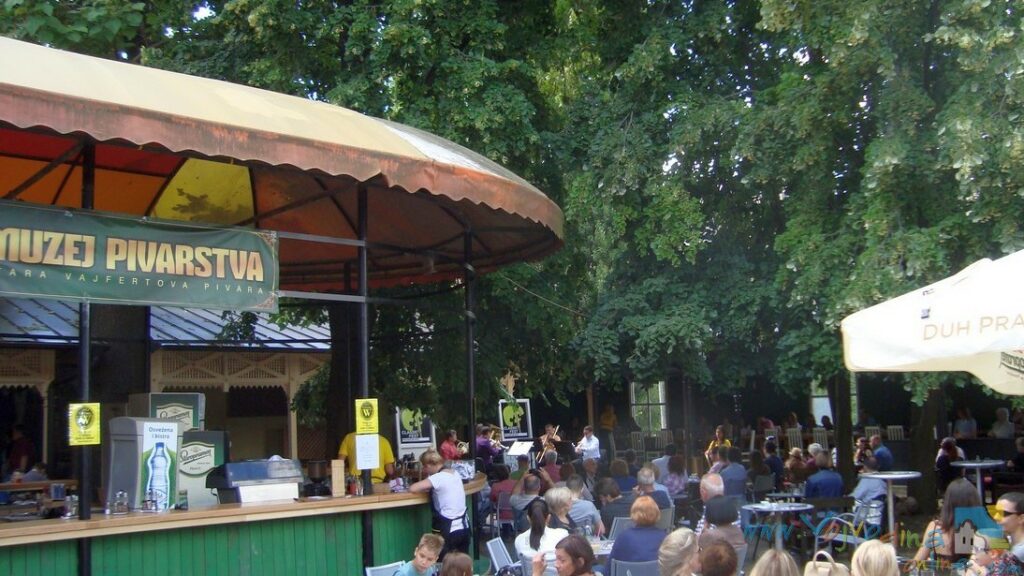
ĐORĐE VAJFERT BREWERY MUSEUM – Pančevo
Đorđe Vajfert Brewery Museum was established as the association “Đorđe Vajfert Brewery Museum” Pančevo in 2016, on the site of the Old Vajfert Brewery. The...
Read more -
Udaljeno 308 m
CITY LIBRARY – Pančevo
The City Library is located in the city center, in a purpose-built building of approximately 2,000 square meters. It has a large reading room with...
Read more



-
Udaljeno 220 m
NATIONAL MUSEUM “PANČEVO” – Pančevo
The National Museum Pančevo was founded on December 23, 1923, at a meeting attended by prominent figures of Pančevo at the time, including Mayor Vladimir...
Read more -
ĐORĐE VAJFERT BREWERY MUSEUM – Pančevo
Đorđe Vajfert Brewery Museum was established as the association “Đorđe Vajfert Brewery Museum” Pančevo in 2016, on the site of the Old Vajfert Brewery. The...
Read more
-
Udaljeno 123 m
GALLERY OF CONTEMPORARY ART – Pančevo
It operates within the Pančevo Cultural Centre. Working hours: Tuesday–Friday: 10:00–14:00 and 17:00–20:00 Saturday: 10:00–14:00 Sunday and Monday: closed
Read more
-
Udaljeno 308 m
CITY LIBRARY – Pančevo
The City Library is located in the city center, in a purpose-built building of approximately 2,000 square meters. It has a large reading room with...
Read more
-
CULTURAL CENTER – Pančevo
The history of the Cultural Center is inseparably linked to the theatrical life in Pančevo, which spans approximately 250 years. The staging of theatrical performances...
Read more -
Udaljeno 123 m
GALLERY OF CONTEMPORARY ART – Pančevo
It operates within the Pančevo Cultural Centre. Working hours: Tuesday–Friday: 10:00–14:00 and 17:00–20:00 Saturday: 10:00–14:00 Sunday and Monday: closed
Read more -
Udaljeno 220 m
NATIONAL MUSEUM “PANČEVO” – Pančevo
The National Museum Pančevo was founded on December 23, 1923, at a meeting attended by prominent figures of Pančevo at the time, including Mayor Vladimir...
Read more
-
CULTURAL CENTER – Pančevo
The history of the Cultural Center is inseparably linked to the theatrical life in Pančevo, which spans approximately 250 years. The staging of theatrical performances...
Read more
-
Udaljeno 278 m
THE EVANGELICAL CHURCH – Pančevo
The evangelistic church rectory was found in 1840, and the first service was held a year later in a classroom in catholic school. It took...
Read more -
Udaljeno 353 m
THE RECTORY OF ST. CHARLES BORROMEO – Pančevo
The Roman Catholic Church the Rectory of St. Karlo Boromejski belongs to the oldest buildings in the historical part of Pančevo. It was built in...
Read more -
Udaljeno 349 m
THE CHURCH OF THE ASSUMPTION – Pančevo
It was built between 1807. and 1810. by the charity of benefactors. Between them was Karađorđe Petrović the leader of the First Serbian Rising. It...
Read more

-
Udaljeno 278 m
THE EVANGELICAL CHURCH – Pančevo
The evangelistic church rectory was found in 1840, and the first service was held a year later in a classroom in catholic school. It took...
Read more -
Udaljeno 353 m
THE RECTORY OF ST. CHARLES BORROMEO – Pančevo
The Roman Catholic Church the Rectory of St. Karlo Boromejski belongs to the oldest buildings in the historical part of Pančevo. It was built in...
Read more -
Udaljeno 349 m
THE CHURCH OF THE ASSUMPTION – Pančevo
It was built between 1807. and 1810. by the charity of benefactors. Between them was Karađorđe Petrović the leader of the First Serbian Rising. It...
Read more