
BEŠENOVO MONASTERY – Bešenovo
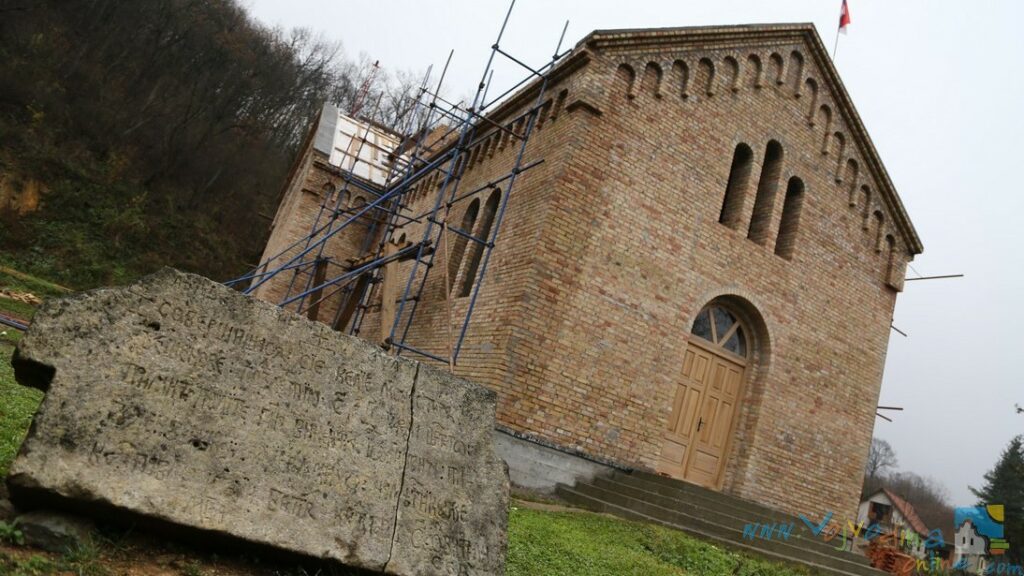
According to tradition, Bešenovo Monastery, whose remains are located on the southern slopes of Fruška Gora along the Čikoš stream, was founded by Serbian King Dragutin at the end of the 13th century. It is dedicated to the Archangels Michael and Gabriel (November 8/21). Other sources associate its founding with the mid-15th century, noting the year 1467 inscribed on the church wall as the date of the monastery’s church painting. The first confirmed record of the monastery appears in the oldest Ottoman census of Srem (1546) and in later 16th-century documents.
When Vitovnica Monastery near Požarevac was destroyed by the Turks, its monks brought the most valuable liturgical items to Bešenovo, including a Gospel Book gilded by Kondo Vuk in 1557 and a silver chalice made in 1662 by the goldsmith Luka (these treasures are preserved in the Serbian Orthodox Church Museum in Belgrade). The 17th century was marked by poverty, as records show Bešenovo monks traveling to Russia for alms (1628, 1648, 1670, 1671). In 1656, the cells and dining hall were restored.
According to a visitation record from 1753, the church was built of brick, though the construction date was not mentioned. The same record describes the three-sided monastery residential buildings (konaks): those on the south side were built in 1730 of brick, while the north and west wings were older. The old iconostasis is noted in the record and, in 1770, was partially replaced with icons by Vasilije Romanović. Between 1907 and 1909, the iconostasis was replaced again, with icons painted by Stevan Aleksić, who also created wall paintings inside the church.
For the monastery dining hall, Aleksić painted a monumental historical composition, “The Burning of St. Sava’s Relics” (oil on canvas, 1909). After World War II, this painting was transferred to the City Museum in Vukovar, part of the Bauer collection. At the time of the visitation, the monastery had 13 monks and 12 tenant families. The church was furnished with ornate silver and gilded items, silk, velvet, brocade, and atlas vestments. Its library contained 22 Serbian manuscripts, including three bound Gospels, 12 menaia, four prologues, and 52 Russian and other printed books. There were 46 icons, as well as furniture, copper and iron vessels, and wine barrels. Economic buildings included a wine cellar, two mills, and two fountains. The monastery possessed six imperial privileges and four imperial charters from the Sultan and the Vizier.
Another important record from 1771 notes a tall bell tower built as part of the newly constructed west wing of the konak. The first reliable information about the chapel in the bell tower, dedicated to the holy martyrs Cyricus (Kirikas) and his mother Julitta whose relics were kept in a reliquary made in 1773, comes from inscriptions on the interior and exterior walls from 1783. These record the wall paintings in the chapel executed by Kuzman Kolarić, sponsored by Trifun Jovanović from Novi Sad, during the tenure of Abbot Silvester. The icon depicting Cyricus and Julitta was donated to the monastery in 1766 by the painter Dimitrije Bačević.
Some sources claim that Kuzman Kolarić (signed as Kosma on the chapel) painted the monastery church iconostasis in 1786, but one published record shows that the inscription refers not to the iconostasis but to the painted decoration of the reliquary housing the relics of the martyrs Cyricus and Julitta. The inscription is dated 1786 and written in Latin letters: ’Kosman Kollarisc moller.’
Although modified in the 19th and early 20th centuries, the Bešenovo church retained its original single-nave Raška-style form until the monastery was destroyed by bombing in 1944. Until then, the positions of the tower, church, and konak walls on the east side of the church remained unchanged, as shown in photographs from 1885–1940. The remains of Bešenovo were dismantled immediately after the war. Archaeological investigation confirmed that the Bešenovo church had a cross-shaped plan with rectangular niches inside and out, and a polygonal apse. The altar was vaulted, and the church had only one entrance on the west: “a single walnut door adorned with mother-of-pearl.”
During the war, the monastery was first looted, then repeatedly attacked by Ustaše, German forces, and NOV units. It was burned, demolished, mined, and finally bombed in 1944 by the German air force, which completely destroyed it. The monastery’s treasures and antiquities were scattered, with many lost forever. Preserved items include fragments of two iconostases and several books, now held in the Museum of Church Art in Sremska Mitrovica.
Nearby attractions
-
 Udaljeno 5.0 km
GRGUREVCI SITE – Grgurevci
In the center of Grgurevci, there is an underground structure with a vaulted ceiling, rectangular in plan and oriented north–south. The building was constructed from...
Read more
-

BEŠENOVO MONASTERY – Bešenovo
According to tradition, Bešenovo Monastery, whose remains are located on the southern slopes of Fruška Gora along the Čikoš stream, was founded by Serbian King...
Read more -
 Udaljeno 3.0 km
MALA REMETA MONASTERY
MALA REMETA MONASTERY, with its church dedicated to the Protection of the Theotokos, was, according to tradition, built by King Dragutin, who donated it to...
Read more -
Udaljeno 4.5 km
JAZAK MONASTERY – Jazak
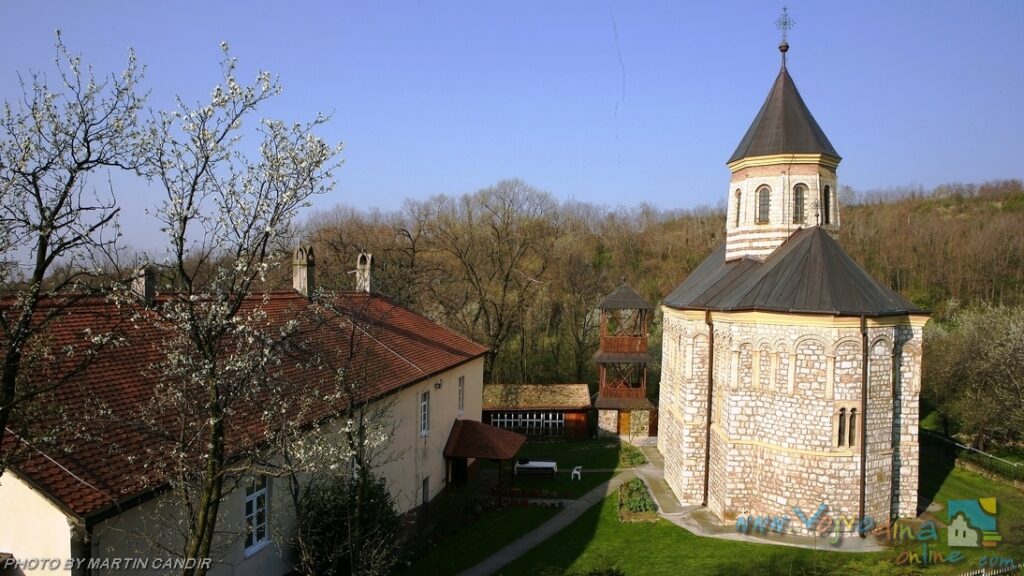
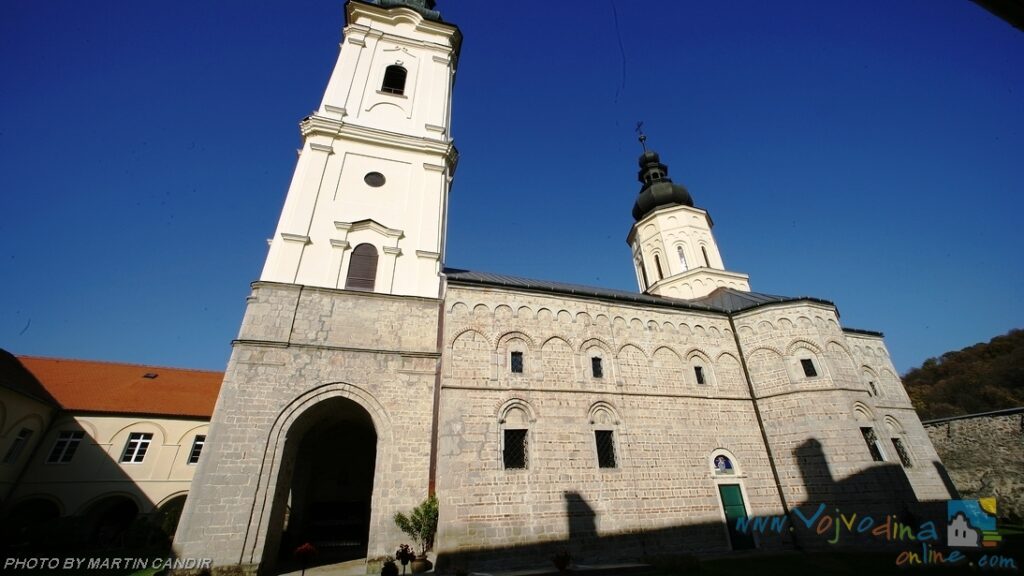
Jazak Monastery with its church dedicated to the Holy Trinity was founded in 1736. The construction of the church, following traditional architectural forms in both...
Read more
-
BEŠENOVO MONASTERY – Bešenovo
According to tradition, Bešenovo Monastery, whose remains are located on the southern slopes of Fruška Gora along the Čikoš stream, was founded by Serbian King...
Read more -
Udaljeno 3.0 km
MALA REMETA MONASTERY
MALA REMETA MONASTERY, with its church dedicated to the Protection of the Theotokos, was, according to tradition, built by King Dragutin, who donated it to...
Read more -
Udaljeno 4.5 km
JAZAK MONASTERY – Jazak
Jazak Monastery with its church dedicated to the Holy Trinity was founded in 1736. The construction of the church, following traditional architectural forms in both...
Read more
-
BEŠENOVO MONASTERY – Bešenovo
According to tradition, Bešenovo Monastery, whose remains are located on the southern slopes of Fruška Gora along the Čikoš stream, was founded by Serbian King...
Read more -
Udaljeno 3.0 km
MALA REMETA MONASTERY
MALA REMETA MONASTERY, with its church dedicated to the Protection of the Theotokos, was, according to tradition, built by King Dragutin, who donated it to...
Read more -
Udaljeno 4.5 km
JAZAK MONASTERY – Jazak
Jazak Monastery with its church dedicated to the Holy Trinity was founded in 1736. The construction of the church, following traditional architectural forms in both...
Read more
-
Udaljeno 5.0 km
THE ETHNO HOUSE “MOTHER ANGELINA” – Grgurevci
The authentic Srem`s household, located very near to the village centre and the local church. The yard, which owns all around Srem known Mrs. Milka,...
Read more

-
BEŠENOVO MONASTERY – Bešenovo
According to tradition, Bešenovo Monastery, whose remains are located on the southern slopes of Fruška Gora along the Čikoš stream, was founded by Serbian King...
Read more -
Udaljeno 3.0 km
MALA REMETA MONASTERY
MALA REMETA MONASTERY, with its church dedicated to the Protection of the Theotokos, was, according to tradition, built by King Dragutin, who donated it to...
Read more -
Udaljeno 4.5 km
JAZAK MONASTERY – Jazak
Jazak Monastery with its church dedicated to the Holy Trinity was founded in 1736. The construction of the church, following traditional architectural forms in both...
Read more
-
BEŠENOVO MONASTERY – Bešenovo
According to tradition, Bešenovo Monastery, whose remains are located on the southern slopes of Fruška Gora along the Čikoš stream, was founded by Serbian King...
Read more -
Udaljeno 3.0 km
MALA REMETA MONASTERY
MALA REMETA MONASTERY, with its church dedicated to the Protection of the Theotokos, was, according to tradition, built by King Dragutin, who donated it to...
Read more -
Udaljeno 4.5 km
JAZAK MONASTERY – Jazak
Jazak Monastery with its church dedicated to the Holy Trinity was founded in 1736. The construction of the church, following traditional architectural forms in both...
Read more -
Udaljeno 5.0 km
GRGUREVCI SITE – Grgurevci
In the center of Grgurevci, there is an underground structure with a vaulted ceiling, rectangular in plan and oriented north–south. The building was constructed from...
Read more
-
Udaljeno 5.0 km
THE ETHNO HOUSE “MOTHER ANGELINA” – Grgurevci
The authentic Srem`s household, located very near to the village centre and the local church. The yard, which owns all around Srem known Mrs. Milka,...
Read more