
ARCHIVE OF THE SERBIAN ACADEMY OF SCIENCES – Sremski Karlovci
The establishment of the Archive is linked to one of the most significant historical events in the modern history of the Serbian people: the Great Migration of the Serbs under Patriarch Arsenije III Čarnojević in 1690. At that time, a part of the Serbian hierarchy and population transferred a number of books, sacred inventory, charters of medieval Serbian rulers, synodical letters, diplomas, and other documents from the Balkan regions of the Ottoman Empire to the Habsburg Monarchy.
This core documentation was subsequently supplemented by correspondence conducted by Patriarch Arsenije III and his successors—either in their capacity as representatives of national-church and educational autonomy or as private individuals—with secular, ecclesiastical, and military institutions or individuals in the Habsburg Monarchy, Serbia, Russia, and other countries. During World War II, the Archive was closed by the German-Ustaše authorities and partially damaged. At the request of the Serbian Academy of Sciences and Arts (SAN), the Holy Hierarchical Synod of the Serbian Orthodox Church, on July 4, 1949, handed over the Archive “for safekeeping and final arrangement of the Metropolitanate and Consistory of Sremski Karlovci” for use in scientific research. The Academy provided the resources, personnel, and conditions for this, secured the return of 81 charters from Vienna, and accepted materials from inadequate and unsecured locations into the Archive—including the Archive of the Karlovac Magistrate, the Karlovac Gymnasium, and others. It also received certain amounts of documents and materials from citizens, purchased some, and microfilmed a large portion of the Dalmatian Eparchy records at the Historical Archive in Zadar.
Chronologically, the unified archival materials in the Karlovac Archive of SAN cover the period from the mid-16th century to the 1970s, with references to an earlier past. The materials were written by people of various professions, in Serbian (and its older variants), German, Latin, Russian-Slavic, Hungarian, Italian, Greek, Romanian, and several other European languages. Content-wise, they include petitions, complaints, reports, memoranda, minutes, contracts, wills, correspondence, population registers, and similar documents. The materials are still being organized, placed in protective boxes, conserved, and shielded from moisture and other damage. Currently, they are classified into 44 collections and 10 smaller sub-collections.
Today, the Archive holds nearly three million documents. For most of them, there exist original or subsequently created administrative protocols and registers, abstracts, personal card files, and summary lists. As a whole, these materials constitute a first-class source for the political, cultural, and economic history of the Serbian people in the Habsburg Monarchy, especially concerning churches and religious life; schools, education, literature, and art; and the diverse relations of Serbs with various Eurasian peoples. Ilarion and Dimitrije Ruvarac, Radoslav M. Grujić, Mita Kostić, Dejan Medaković, Vasilije Krestić, Slavko Gavrilović, Nikola Gavrilović are among the many researchers who have based their books, studies, and articles on these materials or published them in journals and thematic collections.
The Archive of SAN in Sremski Karlovci is the first modernly organized archive in the modern history of Serbia. The earliest known inventory dates back to 1719. The Archive also houses a library of over 2,500 books.
Text taken from www.sanu.ac.rs
Nearby attractions
-

ARCHIVE OF THE SERBIAN ACADEMY OF SCIENCES – Sremski Karlovci
The establishment of the Archive is linked to one of the most significant historical events in the modern history of the Serbian people: the Great...
Read more -
Udaljeno 74 m
GALLERY OF THE CULTURAL CENTER – Sremski Karlovci
Within the gallery of the cultural center there are two colonies. The colonies last for several days, and afterwards the exhibitions of paintings last for...
Read more -
Udaljeno 74 m
SIGHTSEEING SREMSKI KARLOVCI WITH EXPERT GUIDE – Sremski Karlovci
The visiting of the city starts with the essential story of the history of Sremski Karlovci and then starts walking around the centre with the...
Read more -
Udaljeno 106 m
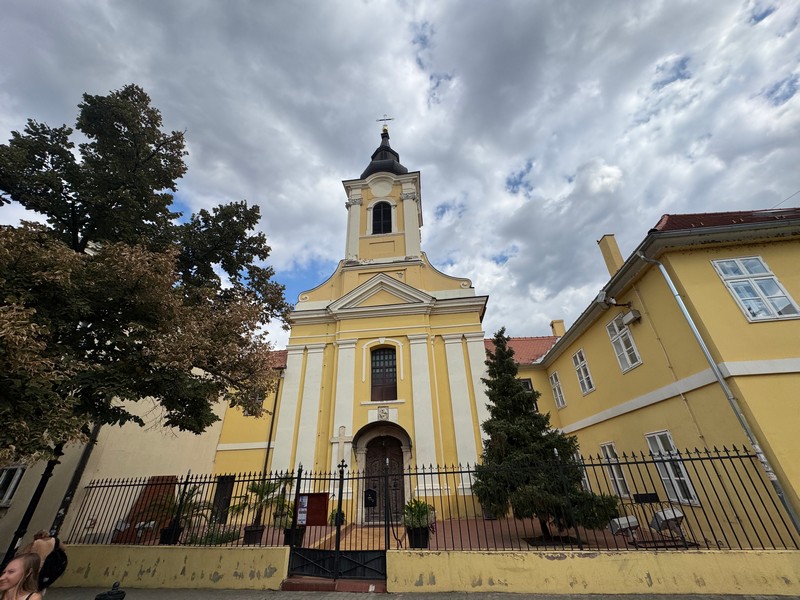
ROMAN CATHOLIC CHURCH OF THE HOLY TRINITY – Sremski Karlovci
The Roman Catholic Church of the Holy Trinity is a Baroque two-nave building with a square-section bell tower and a portal on the western side....
Read more -
Udaljeno 106 m
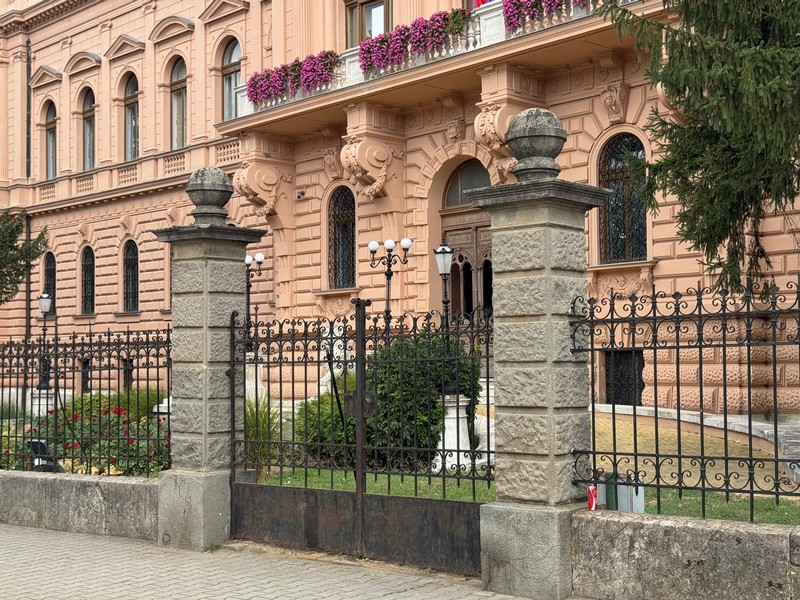
TREASURY OF THE SERBIAN ORTHODOX CHURCH – Sremski Karlovci
The Treasury of the Serbian Orthodox Church is housed in the former Patriarchal Palace, now the Metropolitan’s Palace, a notable building erected in 1894 to...
Read more -
Udaljeno 106 m
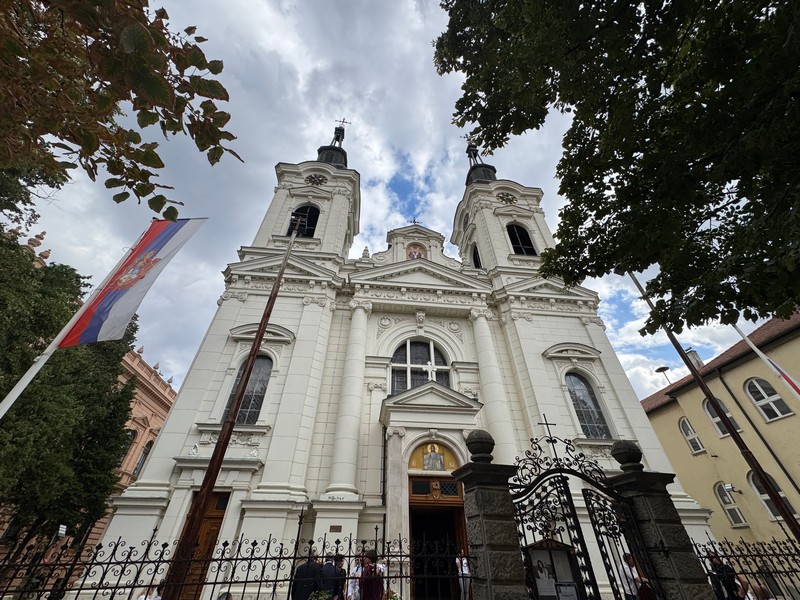
ST. NICHOLAS ORTHODOX CATHEDRAL – Sremski Karlovci
On the site of the present-day Cathedral Church, there was a smaller church dedicated to the same saint as early as the 16th century. In...
Read more

-
Udaljeno 106 m
ROMAN CATHOLIC CHURCH OF THE HOLY TRINITY – Sremski Karlovci
The Roman Catholic Church of the Holy Trinity is a Baroque two-nave building with a square-section bell tower and a portal on the western side....
Read more -
Udaljeno 106 m
ST. NICHOLAS ORTHODOX CATHEDRAL – Sremski Karlovci
On the site of the present-day Cathedral Church, there was a smaller church dedicated to the same saint as early as the 16th century. In...
Read more
-
Udaljeno 106 m
ROMAN CATHOLIC CHURCH OF THE HOLY TRINITY – Sremski Karlovci
The Roman Catholic Church of the Holy Trinity is a Baroque two-nave building with a square-section bell tower and a portal on the western side....
Read more -
Udaljeno 106 m
ST. NICHOLAS ORTHODOX CATHEDRAL – Sremski Karlovci
On the site of the present-day Cathedral Church, there was a smaller church dedicated to the same saint as early as the 16th century. In...
Read more
-
Udaljeno 152 m
KAIROS GALLERY & BOOKSTORE – Sremski Karlovci
Bookstore, gallery, antiquarian shop, and souvenir shop. Opening hours: Monday: 8:00 AM–3:00 PM Tuesday–Saturday: 8:00 AM–8:00 PM Sundays and holidays: 10:00 AM–6:00 PM
Read more
-
 Udaljeno 144 m
CELLAR BAJILO – Sremski Karlovci
In the very heart of Sremski Karlovci is the Bajilo winery. The Bajilo family has a long tradition of viticulture and winemaking and as such,...
Read more

-
Udaljeno 152 m
KAIROS GALLERY & BOOKSTORE – Sremski Karlovci
Bookstore, gallery, antiquarian shop, and souvenir shop. Opening hours: Monday: 8:00 AM–3:00 PM Tuesday–Saturday: 8:00 AM–8:00 PM Sundays and holidays: 10:00 AM–6:00 PM
Read more
-
ARCHIVE OF THE SERBIAN ACADEMY OF SCIENCES – Sremski Karlovci
The establishment of the Archive is linked to one of the most significant historical events in the modern history of the Serbian people: the Great...
Read more -
Udaljeno 74 m
GALLERY OF THE CULTURAL CENTER – Sremski Karlovci
Within the gallery of the cultural center there are two colonies. The colonies last for several days, and afterwards the exhibitions of paintings last for...
Read more -
PATRIARCHAL PALACE – Sremski Karlovci
The Patriarchal Palace is the most monumental 19th-century building in Vojvodina. It was built in 1894 by Serbian Patriarch Georgije Branković, to the design of...
Read more -
Udaljeno 106 m
TREASURY OF THE SERBIAN ORTHODOX CHURCH – Sremski Karlovci
The Treasury of the Serbian Orthodox Church is housed in the former Patriarchal Palace, now the Metropolitan’s Palace, a notable building erected in 1894 to...
Read more -
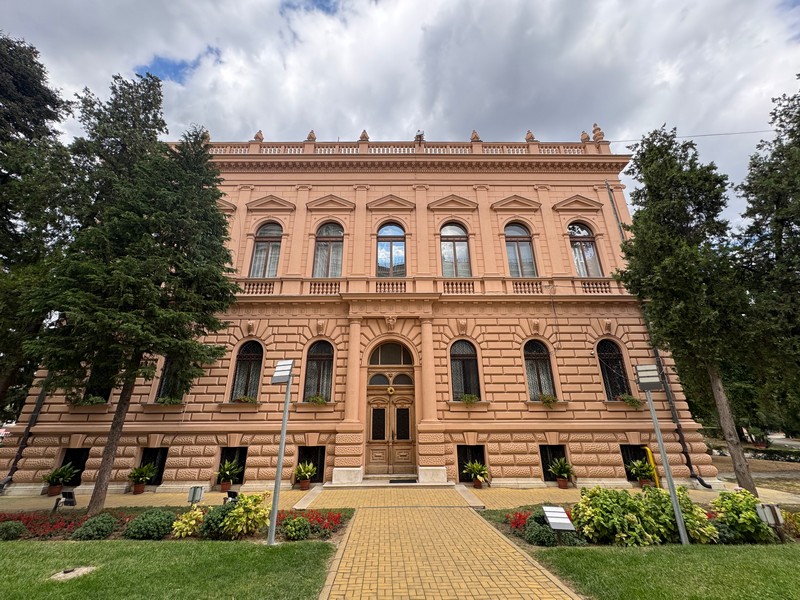
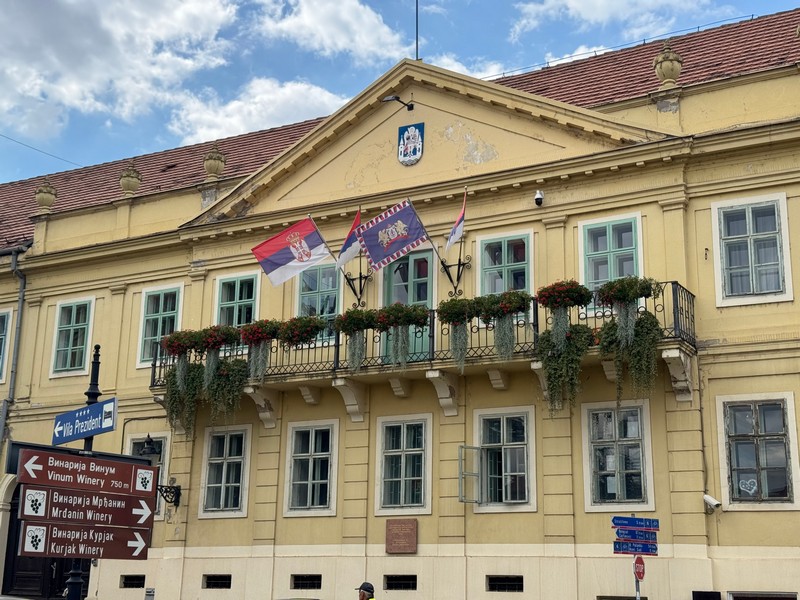
MAGISTRATE – Sremski Karlovci
The Magistrate Building was constructed between 1808 and 1811 in the Neoclassical style. It was originally intended for the needs of the garrison at Petrovaradin...
Read more -
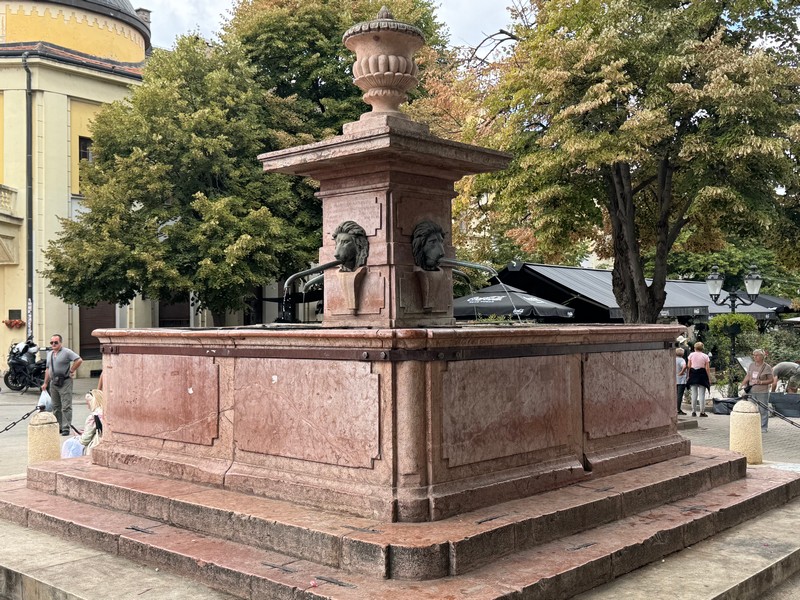
FOUR LIONS FOUNTAIN – Sremski Karlovci
The “Four Lions” fountain was erected in 1799 to commemorate the completion of the first municipal water supply system. Following a proposal by the military...
Read more
-
Udaljeno 144 m
CELLAR BAJILO – Sremski Karlovci
In the very heart of Sremski Karlovci is the Bajilo winery. The Bajilo family has a long tradition of viticulture and winemaking and as such,...
Read more
-
Udaljeno 144 m
CELLAR BAJILO – Sremski Karlovci
In the very heart of Sremski Karlovci is the Bajilo winery. The Bajilo family has a long tradition of viticulture and winemaking and as such,...
Read more
-
Udaljeno 74 m
GALLERY OF THE CULTURAL CENTER – Sremski Karlovci
Within the gallery of the cultural center there are two colonies. The colonies last for several days, and afterwards the exhibitions of paintings last for...
Read more -
Udaljeno 106 m
TREASURY OF THE SERBIAN ORTHODOX CHURCH – Sremski Karlovci
The Treasury of the Serbian Orthodox Church is housed in the former Patriarchal Palace, now the Metropolitan’s Palace, a notable building erected in 1894 to...
Read more -
Udaljeno 152 m
KAIROS GALLERY & BOOKSTORE – Sremski Karlovci
Bookstore, gallery, antiquarian shop, and souvenir shop. Opening hours: Monday: 8:00 AM–3:00 PM Tuesday–Saturday: 8:00 AM–8:00 PM Sundays and holidays: 10:00 AM–6:00 PM
Read more -
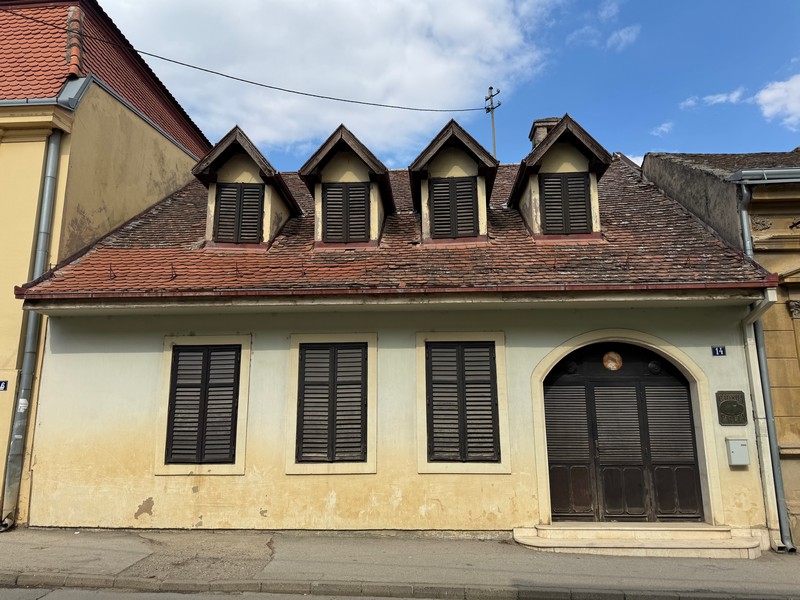
”PALETA” GALLERY – Sremski Karlovci
Paleta Gallery was first opened to the public in 1986 with a retrospective exhibition of Milan Kečić. Since then, several other artists have exhibited in...
Read more
-
Udaljeno 74 m
SIGHTSEEING SREMSKI KARLOVCI WITH EXPERT GUIDE – Sremski Karlovci
The visiting of the city starts with the essential story of the history of Sremski Karlovci and then starts walking around the centre with the...
Read more
-
ARCHIVE OF THE SERBIAN ACADEMY OF SCIENCES – Sremski Karlovci
The establishment of the Archive is linked to one of the most significant historical events in the modern history of the Serbian people: the Great...
Read more