
CITY HALL – Subotica
Unlike many European cities, the center of Subotica is not dominated by a cathedral or a church, but by a City Hall. Because of its location, size and ornate architecture of Hungarian Art Nouveau, the City Hall has become a landmark, the center and the symbol of Subotica.
It was built between 1908 and 1910, with the interior decoration completed in 1912. It extends over an area of nearly 6000 m² with 16000 m² of gross floor area. The tower is 76 meters high with a belvedere at the height of 45.5 meters and an unforgettable view of Subotica and its surrounding. The City Hall was designed by Marcell Komor and Dezső Jakab, prominent architects from Budapest.
The City Hall has a symmetrical layout with four inner courtyards / atrium sand four entrances. On the north side, where there is a beautiful park and the Blue Fountain, there is a vestibule with a ceremonial staircase carved in marble, leading to the first representative floor. On that floor there are three Halls – Green and Yellow, used by the Grand Prefect and now the Mayor and a third one, central, largest and most beautiful – Grand Hall, which forms the very heart of Subotica’s City Hall. Grand Hall is used for meetings of the City Assembly, concerts, weddings and important events. It boasts sixteen remarkable stained glass windows in shimmering colors by Miksa Róth and Sándor Nagy who is also the author of six stained glass windows in the side apses, all of which are considered to be exceptional works of art.
The City Hall, with its modern concept and in accordance with contemporary requirements, even today satisfies many of the city’s needs. It contains the Mayor’s Cabinet, City Administration offices and municipal services, historical archives, boutiques, banks…
Functionality and modernity, as well as the synthesis of various art disciplines- architecture, painting and applied arts are probably the most important value of this building, but what leaves visitors breathless is certainly its lavish ornamentation. Art Nouveau decoration is here enriched with a distinct romantic note of Hungarian folklore through patterns of stylized flowers as well as ceramic and wrought iron floral jewelry. Carved wood, brass fittings, lamps, ceramic eosin tiles, all contribute to the artistic value and extravagance of this unique building.
Komor and Jakab
In 1897, architects Marcell Komor (1868-1944) and Dezső Jakab (1864-1932) joined forces and opened an architectural bureau in Budapest. The duo has designed buildings throughout Hungary until the end of the war in 1918. They were students and followers of the founder of the Hungarian version of Art Nouveau – Ödön Lechner. Marcell Komor was the lead partner, in charge of the concept of the building, organization of space, function and construction, while Jakab Dezső handled the interior design part and meticulously planned everything, down to the smallest detail. Although the scope of their work in Subotica isn’t particularly large, each one of their buildings became a symbol: Synagogue, Subotica Savings Bank Palace (now Korzo Street no. 4), City Hall, and a large complex of buildings in Palić –Water Tower, Grand Terrace, Women’s Lido and Memorial Fountain.
Opening hours:
for individual tourists: from Tuesday to Friday at 12:00; for groups: by appointment
Starting point: City Souvenir Shop (City Hall Northern entrance)
Nearby attractions
-
 Udaljeno 241 m
“DR. VINKO PERČIĆ” REGIONAL GALLERY – Subotica
This gallery presents works from various artistic disciplines: painting, sculpture, graphics, multimedia performances, and more. It also preserves and exhibits art objects from the legacy...
Read more -

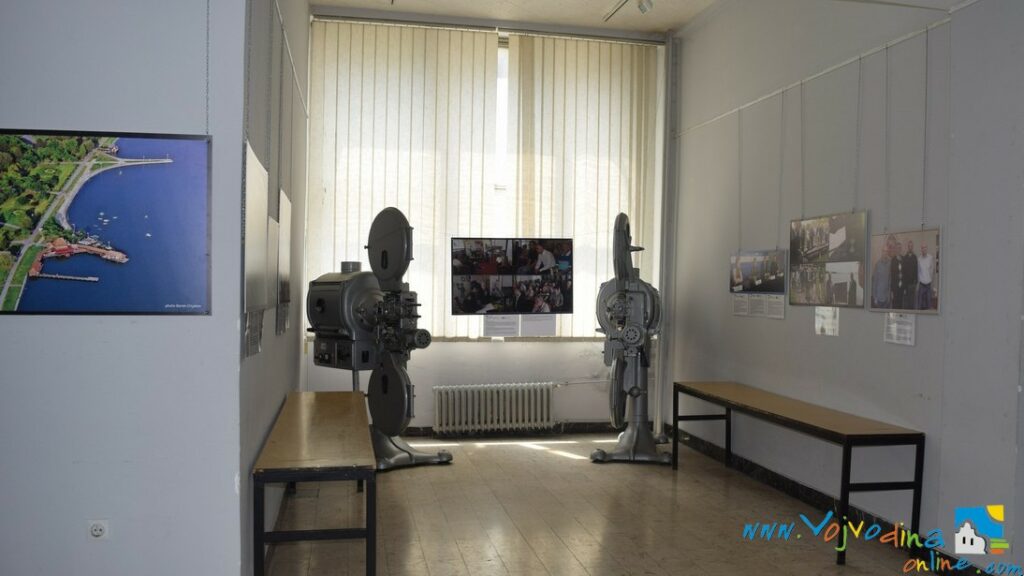
EXHIBITION SPACE OF THE OPEN UNIVERSITY – Subotica
The gallery hosts and showcases works by many prominent artists from Serbia, as well as numerous international artists, particularly during the International Children’s Theatre Festival...
Read more

-
Udaljeno 177 m
CITY LIBRARY – Subotica
The City Library was founded in 1890 and is located in a Neo-Baroque building on the eastern side of the main square. It was designed...
Read more

-
Udaljeno 54 m
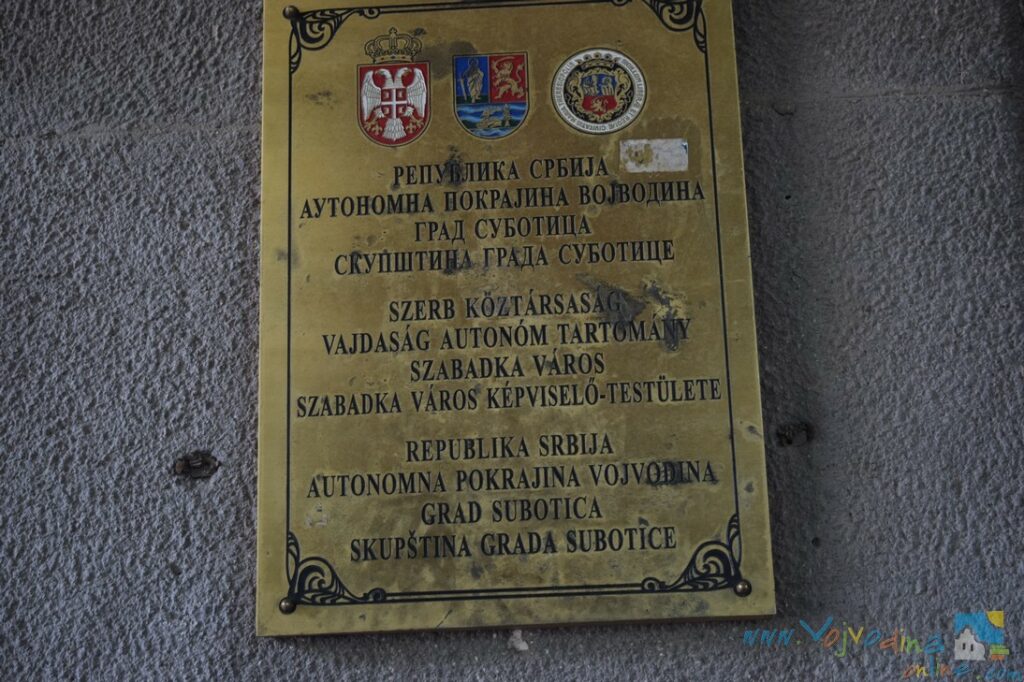
HISTORICAL ARCHIVE SUBOTICA – Subotica
In the second half of the 19th century, with the development of historiography as a scientific discipline, Subotica recognized that archives were indispensable sources of...
Read more
-
Udaljeno 54 m
HISTORICAL ARCHIVE SUBOTICA – Subotica
In the second half of the 19th century, with the development of historiography as a scientific discipline, Subotica recognized that archives were indispensable sources of...
Read more -
Udaljeno 103 m
CONFECTIONARY “PELIVAN” – Subotica
If you wish to eat some home-made ice-cream, this is the best place to do it! Secret about how to make the best ice-cream is...
Read more -
Udaljeno 125 m
SERBIAN CULTURAL CENTRE “SVETI SAVA” – Subotica
The Serbian Cultural Center “Saint Sava” was founded on April 13, 1991, with the aim of promoting Serbian spirituality and culture in this region, as...
Read more -
Udaljeno 142 m
RESTAURANT “BON APETIT” – Subotica
Bon Appetit Restaurant was established in 2011 and it’s located in the heart of the city. For relatively short time the staff gained great trust...
Read more -
Udaljeno 177 m
CITY LIBRARY – Subotica
The City Library was founded in 1890 and is located in a Neo-Baroque building on the eastern side of the main square. It was designed...
Read more -
Udaljeno 193 m
CAFFE-BAR “MOMENTO” – Subotica
Caffe bar Mommento is situated in the city center and it’s a favorite place of many people in the summer because of the shade it’s...
Read more

-
Udaljeno 125 m
SERBIAN CULTURAL CENTRE “SVETI SAVA” – Subotica
The Serbian Cultural Center “Saint Sava” was founded on April 13, 1991, with the aim of promoting Serbian spirituality and culture in this region, as...
Read more
-
Udaljeno 252 m
SMALL SYNAGOGUE – Subotica
The buildings of the Jewish Community houses the small synagogue at the ground floor. Originally it was a winter synagogue. It is nicely decorated with...
Read more
-
Udaljeno 103 m
CONFECTIONARY “PELIVAN” – Subotica
If you wish to eat some home-made ice-cream, this is the best place to do it! Secret about how to make the best ice-cream is...
Read more -
Udaljeno 142 m
RESTAURANT “BON APETIT” – Subotica
Bon Appetit Restaurant was established in 2011 and it’s located in the heart of the city. For relatively short time the staff gained great trust...
Read more -
Udaljeno 193 m
CAFFE-BAR “MOMENTO” – Subotica
Caffe bar Mommento is situated in the city center and it’s a favorite place of many people in the summer because of the shade it’s...
Read more -
CONFECTIONARY “DARABOŠ” – Subotica
If you ever wondered how wonderful cakes taste this is where you should try. Great masters for making variety of cakes work here and they’ll...
Read more
-
Udaljeno 252 m
SMALL SYNAGOGUE – Subotica
The buildings of the Jewish Community houses the small synagogue at the ground floor. Originally it was a winter synagogue. It is nicely decorated with...
Read more
-
Udaljeno 142 m
RESTAURANT “BON APETIT” – Subotica
Bon Appetit Restaurant was established in 2011 and it’s located in the heart of the city. For relatively short time the staff gained great trust...
Read more
-
Udaljeno 103 m
CONFECTIONARY “PELIVAN” – Subotica
If you wish to eat some home-made ice-cream, this is the best place to do it! Secret about how to make the best ice-cream is...
Read more -
Udaljeno 142 m
RESTAURANT “BON APETIT” – Subotica
Bon Appetit Restaurant was established in 2011 and it’s located in the heart of the city. For relatively short time the staff gained great trust...
Read more -
Udaljeno 193 m
CAFFE-BAR “MOMENTO” – Subotica
Caffe bar Mommento is situated in the city center and it’s a favorite place of many people in the summer because of the shade it’s...
Read more -
CONFECTIONARY “DARABOŠ” – Subotica
If you ever wondered how wonderful cakes taste this is where you should try. Great masters for making variety of cakes work here and they’ll...
Read more
-
Udaljeno 54 m
HISTORICAL ARCHIVE SUBOTICA – Subotica
In the second half of the 19th century, with the development of historiography as a scientific discipline, Subotica recognized that archives were indispensable sources of...
Read more -
Udaljeno 125 m
SERBIAN CULTURAL CENTRE “SVETI SAVA” – Subotica
The Serbian Cultural Center “Saint Sava” was founded on April 13, 1991, with the aim of promoting Serbian spirituality and culture in this region, as...
Read more -
Udaljeno 177 m
CITY LIBRARY – Subotica
The City Library was founded in 1890 and is located in a Neo-Baroque building on the eastern side of the main square. It was designed...
Read more -
Udaljeno 241 m
“DR. VINKO PERČIĆ” REGIONAL GALLERY – Subotica
This gallery presents works from various artistic disciplines: painting, sculpture, graphics, multimedia performances, and more. It also preserves and exhibits art objects from the legacy...
Read more -
Udaljeno 256 m
EUROCINEMA – Subotica
EuroCinema has on its repertoire mostly European films including Serbian ones and the award-winning productions at prestigious European film festivals. Beside that some box-office films...
Read more -
EXHIBITION SPACE OF THE OPEN UNIVERSITY – Subotica
The gallery hosts and showcases works by many prominent artists from Serbia, as well as numerous international artists, particularly during the International Children’s Theatre Festival...
Read more